


Adaptable, Resilient and delicious: The Brangus
US ranchers in the early 1900’s were always looking for
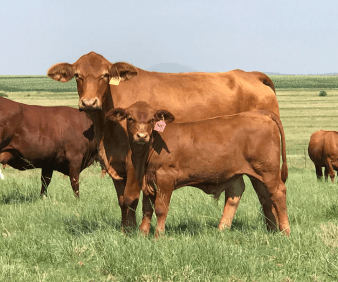

US ranchers in the early 1900’s were always looking for new ways to improve the genetics of their cattle herds, constantly seeking desirable beef-type animals that would not only survive in the adverse conditions they faced, but thrive in them! It was this need that led to the brilliant idea of crossing two well-known, popular beef breeds that would produce a composite breed in which the superior characteristics of both parent animals would be optimised. The two breeds they decided on were the Brahman – popular due to its resistance to disease, exceptional hardiness, and outstanding maternal instincts – and the Angus - known for their superior carcass qualities and highly fertile females. This new breed was aptly named the Brangus, and high expectations were held for the endless possibilities that this breed could prove to bring to the industry.
Much of the early crossbreeding was done at the USDA Experiment Station in Louisiana, however a few of the larger ranches and some individual breeders in other parts of the United States and Canada were also carrying out experimental breeding programs. As the experiments continued, the researchers and private breeders noticed that these animals grew faster and had more meat than many of the popular British beef breeds of the time, all while retaining the ability to thrive under adverse conditions. When the genetics of the Brangus was stabilised at 3/8’s Brahman and 5/8’s Angus, the optimal combination of the traits of two highly successful parent breeds was obtained. These animals typically have a short, broad head and a smooth coat, they are polled and medium framed and can either be red or black in colour.

On July 2nd, 1949, the early breeders – coming from 16 different states and from Canada – came together in Oklahoma to establish the American Brangus Breeders Association, later renamed the International Brangus Breeders Association (IBBA). The name was, however, changed yet again in 1956, to the International Brangus Breeders Society, who by 1978 had more than 1800 active members, and roughly 150 000 registered Brangus animals. Since then, the Brangus breed has proved very successful, as is evident by their growing popularity in many parts of the world, including South Africa.
The Brangus cattle we have in South Africa today come from a variety of different origins; in 1963, several imports of live Brangus cattle from the United States of America (USA) to South Africa were made – this was the first time this breed has ever been imported to the country. However, in addition to this, South African breeders have also been crossbreeding their own Brahman and Angus cattle to produce Brangus animals. Furthermore, Brangus semen and embryos have been imported on a regular basis since the establishment of the South African Brangus Cattle Breeders Society (SABCBS), increasing the genetic variability of the Brangus gene pool we have in South Africa by allowing for a consistent introduction of new genetic material into the local population.

The Brangus cattle breed is quite beloved among the cattle farming community and has occasionally
been described by farmers as “the ninth wonder of the world”.
The first Brangus stud in South Africa was established in 1963 by Mr. Raymond Green of Ladysmith. In 1976, in order to gain recognition of and awareness for the breed, the first Brangus Club was established! Ten years later, in 1986, the South African stud Book Association accepted the constitution and breeding methods of the Brangus breeder’s society of South Africa, and later that year the breed was officially recognized by the registrar of livestock improvement, as well as the South African stud book and livestock improvement association. Currently, the association boasts with roughly 158 members, and with more than 40 000 registered Brangus animals. This makes them one of the few growing breeds in SA, currently being the 4th largest breed in the country.The Brangus cattle breed is quite beloved among the cattle farming community and has occasionally been described by farmers as “the ninth wonder of the world”. In addition to their incredible hardiness, Brangus cattle have a gentle disposition and the ability to thrive under the typical climatic conditions we find across South Africa. They are extremely versatile, and go through breeding and calving with great ease, whilst also portraying wonderful maternal and milking abilities. The Brangus cow does not only adapt in challenging environments, she actually thrives - particularly under extensive veld conditions. As the majority of slaughter animals are produced under such conditions, optimal performance on the veld is crucial in order for the cattleman to make a profit.
Efficient cows are the foundation of a profitable beef herd; the Brangus cows superior maternal and milking abilities enable her to produce calves with remarkable weaning weights – which is exactly where the money lies. Over the years, prevailing droughts have proven that the Brangus cow has incredible perseverance, still producing decent calves or falling pregnant within the first 6 weeks of the breeding season, despite the unideal conditions. The calm temperament and low management demands of the Brangus cow furthermore make her easy to manage, and capable of caring for herself in any of the various climatic conditions across South Africa. This breed is considered to be extremely versatile, establishing themselves as high performers on pasture, in the veld and in the feedlot. They have proven highly resistant to heat and high humidity, whilst still being hardy under conditions of cool and cold climate, in which case they seem to produce enough hair for sufficient protection against the cold.

In terms of meat and carcass quality, the Brangus is yet again a stalwart; scientific results have shown that 98% of all Brangus carcasses are classified as tender or super-tender - one of the most sought-after qualities of the current consumer market. Attributes such as this, along with marbling scores and flavour, are well-known traits associated with a Brangus carcass. Furthermore, the Brangus has the ability to produce heavy carcasses of exceptional quality, without being excessively fat. This provides the optimal carcass for consumers who prioritise juiciness and flavour, while still catering to the needs of the health-conscious consumer who prefers a lower fat to meat ratio.
Overall, combining the hardiness, disease resistance and incredible maternal instincts of the Brahman breed with the superior carcass quality, fertility, maternal and milking ability of the Angus has provided the beef industry that excels beyond expectation. The Brangus has given to beef farmers over the world a treasured asset that provides endless promise and enduring benefit – one that is profitable, fertile, sustainable, well adapted and all-round excellent.


