


Bonsmara: The breed for every and any reason
Roughly 100 years ago, our country suffered an economic catastrophe
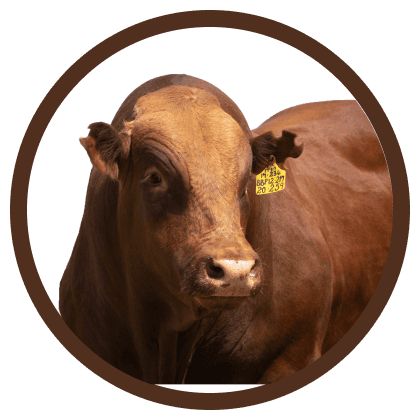


Roughly 100 years ago, our country suffered an economic catastrophe that would inspire the origin of one of the most dominant breeds of beef cattle South Africa has ever seen. The Great Depression of the 1930’s caused a sudden lack in demand for many agricultural products, destroying the prices on the once profitable commodities farmers made a living from. Many farmers found themselves unable to repay the mortgages on their over-capitalized farms, and the remaining farmers had to do all in their power to optimize production and increase profits. Beef producers found themselves in need of animals that could produce more; something that offered better carcass quality, calving regularity and meat output than what the indigenous Afrikaner cattle had to offer. Because of this, the country saw an influx of Bos Taurus breeds - from Europe and the US - known for their high productivity and high-quality beef.
The arrival of these animals on the African shores was cause for much hope and excitement, however the extreme heat and humidity soon proved too much for these unadapted animals, who greatly suffered from subtropic degeneration. This meant that they were no longer able to thrive and produce at the same levels as they had in their native environments - a significant problem, as South African farmers of the time greatly depended on these cattle for food and future economic sustainability. The need for a new breed of cattle was soon realized; one who could efficiently produce high quantities of beef in extensive, subtropical climates, without compromising on beef quality and reproduction traits. This was the reasoning behind the development of the Bonsmara cattle breed - famously named after its creator, Professor Jan Bonsma.


The Bonsmara is a composite breed of cattle that developed in 1936 in the Transvaal Province of South Africa at the Mara Research Station. Since the British breeds were not suitable for the subtropical climate of South Africa and the local Afrikaner breed struggled with calving regularity, professor Bonsma tested various breed combinations in order to achieve the perfect blend of genes to overcome these challenges. Bulls from five British beef breeds were used on Afrikaner cows, and performance tests were done on their progeny. Selection procedures were very strict and science-based, resulting in rapid progress of the upcoming breeds performance.
Ultimately, the better performing Hereford and Shorthorn cross-breeds were continued, and three-quarter Afrikaners were mated to half-breeds to obtain progeny with 5/8 Afrikaner and 3/8 Hereford or Shorthorn blood. Initial breeding results were very encouraging, with weaning weights of the crossbred cows averaging around 195 kg at 240 days - about 20% higher than those of the three parent breeds. Likewise, the calving percentages of the crossbred cows were noticeably higher. The calf mortality rate was much lower than in the British Beef breeds and closer to that of the more resistant Afrikaners. The Bonsmara was recognised as a breed in 1964, and 8 years later in 1972, it was officially registered. Between 1970 and 1998 the number of active breeders increased from 37 to over 300, with more than 95 000 breeding females available.
Due to its hardiness and adaptability, the Bonsmara became so popular that it was subsequently exported to many of South Africa’s neighboring countries, and even as far as Australia, Argentina, Brazil and the USA where it has demonstrated its worth under comparable circumstances. From the initial beginnings, the Bonsmara has undergone significant evolution, thanks to its selective breeding and compulsory performance testing system. This has resulted in a genetically improved animal that meets the needs of commercial meat producers and stud breeders alike. Performance testing involves weighing and conformation inspections of all stud cattle and has been instrumental in the breed’s improvement.
Through this system, breeders have been able to select animals with desirable traits such as high meat yield, low maintenance requirements, and excellent mothering abilities. As a result of this selective breeding, the Bonsmara of today is a medium-framed animal with better growth and lower maintenance requirements than its earlier counterparts. Bonsmara cattle are also known for their adaptability to subtropical climates, high fertility, calving ease, and excellent meat quality.
Furthermore, the Bonsmara’s calm temperament and ease of handling have made it a popular choice for livestock farmers countrywide. These traits also make them uniquely suitable for use in crossbreeding programmes, both in South Africa and abroad. As a result of these improvements, the Bonsmara has become a sought-after breed and valuable asset in the livestock industry, contributing to the continued growth and success thereof. Through the research conducted at the Mara Research Station and the continued research being done, Bonsmara cattle have been shown to perform better on marginal grazing than other breeds, including indigenous, dual-purpose, and British beef breeds - exactly what is needed for the extensive beef production industry.
With the continued use of research and compulsory performance testing for economic traits and physical appearance, the Bonsmara is expected to remain the most dynamic beef breed in South Africa. As the livestock industry continues to grow and evolve, the versatility and adaptability of the homebred Bonsmara breed will undoubtedly play a crucial role in its success.


