


DISCOVERING SOUTH AFRICA’S GRASSES: Digitaria eriantha
Name Origin and Common Names: The origin of the genus


Name Origin and Common Names:
The origin of the genus name “Digitaria” is derived from the Latin word for ‘finger’, digitus, referring to the long, finger-like inflorescences produced by the grasses. “eriantha” originates from the Greek words erio and anthos – which means ‘woolly’ and ‘flower’ – referring to the hairs on the spikelets.
Digitaria eriantha is commonly known as Common Finger Grass (English), Woolly Finger Grass (English), Gewone Vingergras (Afrikaans), Smutsvinger (Afrikaans), isikonko (Zulu), Moeane ( Sesotho) and Namele (Tswana).
Description:
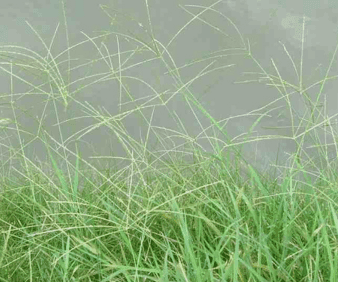
Common finger grass is a robust perennial grass that typically reaches a height of around 1.8 meters. This hardy, evergreen species is characterized by its distinctive brown, digitate inflorescence and features tufted growth, sometimes with stoloniferous characteristics. The plant's rhizomes are short, sturdy, and unbranched, occasionally producing long, hairy stolons.
This species can have simple or branched stems ranging from 400 mm to 18000 mm tall. The stems are typically unbranched and are devoid of hair with joints that tend to be a brownish colour. The elongated leaf blades measure between 50 and 400 mm in length, and between 2 mm and 14 mm in width, and can be either smooth or hairy. Its inflorescence forms a digitate panicle composed of 3 to 15 racemes, each ranging from 50 to 200 mm in length. The spikelets are small, measuring between 2.2 and 4.0 mm, and are covered in hairs.
Common finger is a fast-growing grass that flowers during mid to late summer, typically from January to April, and produces greenish seed-heads with 3 to 10 fine branches along a short stem section of less than 50 mm in length.
Distribution and Habitat:
Digitaria eriantha is native to tropical Southern Africa but can be found in many countries such as Angola, Zimbabwe, Mozambique, Namibia, Botswana, Eswatini (formerly Swaziland), Lesotho, and South Africa. In South Africa, it thrives in various provinces, including Limpopo, North-West, Gauteng, Mpumalanga, Free State, KwaZulu-Natal, as well as the Northern, Western, and Eastern Cape Provinces. Due to its adaptability and utility, it is also nowadays also cultivated as a pasture grass in many other countries.
Common finger grass exhibits remarkable adaptability to different soil types and environmental conditions. It mainly grows in undisturbed veld such as grassland or savannah, but has the ability to utilise a wide variety of other habitat types. In arid regions, finger grass will grow in sandy and gravelly soils, whereas in areas with higher annual rainfall it can be found in damp soils, such as near seasonal wetlands. It will grow in soil with a pH of between 4.3 to 8.5.
Typically, this grass prefers regions with annual rainfall ranging from 700 to 4,000 mm/year, and while it does display drought tolerance, inadequate rainfall remains the primary limiting factor affecting its production range and yield. Common finger grass thrives in full sun as it is generally considered to have low shade tolerance and will optimally grow in temperatures of between 15.9 and 27.8°C. Remarkably, it also exhibits tolerance to fire, showcasing its resilience in various ecological contexts.
Production:
For common finger grass, its production capabilities are influenced by factors such as genetic variation, environmental conditions, and management practices. Typical dry matter yields range from approximately 10 to 20 tons per hectare and, under optimal conditions, may even exceed 30 tons per hectare. The grass's productivity is notably responsive to photoperiodism, as demonstrated in the Caribbean, where pastures receiving over 400 kg of N fertilizer per hectare exhibit substantial variation in production.
During the longer-day season, production can reach up to 100 kg DM/ha/day, while in the short-day season, this decreases to around 50 kg DM/ha/day. Because common finger grass pastures tend to be more productive in warm seasons, they display a greater resilience against high stocking density, trampling, and 30-day rotations. However, during the cooler season - especially in higher elevations – when the grass's productivity diminishes, it would be advisable to implement rotation cycles of 60 days or longer for optimal management.
Ecology:
Digitaria eriantha also plays a vital ecological role in its native habitat. It reproduces through both seeds and vegetative means, primarily stolons, which are creeping runners enabling the formation of extensive colonies. The stoloniferous varieties, in particular, contribute to effective ground cover, aiding in soil conservation efforts.
While its seeds can be dispersed by water and animals, their viability is often low. Successful seed reproduction requires early-stage competition avoidance. In its native sandy soil habitat, seeding types dominate, as they struggle to establish on heavier soils without disturbance. Both tufted and stoloniferous seeding types find use in sandy soil cultivation, although they can adapt to clay soils once established.
Proper preparation of seedbeds and rolling will aid in the germination and establishment of finger grass seeds, and once rooted, they have the potential to expand beyond the sown area. This grass is classified as of Least Concern (LC) on the Red List of South African plants, with a stable population and no significant endangerment. While it may be considered invasive in some regions, it generally poses no severe threat in its naturalized areas and when in bloom, actually attracts various species of mammals and birds.
Uses of Digitaria Eriantha:
Common finger grass serves a multitude of valuable purposes in agriculture and local practices. It is a staple for livestock feed, employed extensively for pasture, hay, and silage. This resilient grass can withstand heavy grazing, making it a top choice for livestock management in subtropical and tropical climates, particularly for cattle, sheep, horses, and lactating cows. The rapid growth exhibited by this grass makes it ideal for heavy summer grazing.
Furthermore, it can be utilized as standing hay, providing a valuable resource well into the late winter months. Its palatability to livestock makes it a preferred species for beef and milk production. Beyond agriculture, this versatile grass also finds application in soil erosion control, offering essential ground cover for soil conservation. Additionally, it holds cultural significance, with its racemes used for hair decorations and its fibres contributing to the creation of baskets and various craftwork.
Similar Species:
This taxon comprises many morphologically different types that were once - and oftentimes still are - considered to be separate species. It is an incredibly variable grass species and exhibits close relationships with and gradual transitions to D. natalensis, D. milanjiana and D. seriata. Today it is distributed in many humid subtropical and tropical areas and has adapted to a multitude of environments.
The broader genus, Digitaria, is extensive, featuring approximately 230 species, with a diverse distribution primarily in tropical and warm temperate zones. In southern Africa, there are around 36 species, both indigenous and naturalized, that are widely dispersed. The umbrella term "crabgrass" is commonly applied to multiple species within the Digitaria genus, reflecting the morphological diversity and adaptability within this taxonomic group.


