


Discovering South Africa’s Grasses: Eragrostis curvula
Name Origin and Common Names: Weeping Love Grass


Name Origin and Common Names:
Weeping Love Grass (E) African Love Grass (E) Oulandsgras (A) Digtegras (A) Matolo (S) Bojang-jwa-phofu (Ts) numSingizane (Z)
Description
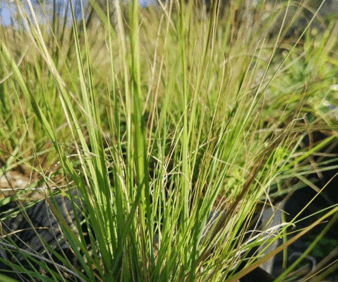
Weeping Love Grass is a perennial tussock grass that grows 300-1200 mm tall. It is a robust, densely tufted grass that forms large clumps with an abundance of long drooping leaves at the base, from where it derives its common name. Leaves are dark green to blue-green and rough to the touch, while the sheath at the base of each leaf is smooth with a ring of hairs at its opening. The leaves can be rolled or flat and are quite narrow. They reach lengths of up to 500 mm while being between 1-5 mm wide. The inflorescence, 100-300 mm long, is a much-branched, erect, or pendent panicle. Although its inflorescence is mostly an open panicle, Weeping Love Grass occurring in the Northern Cape, Western Cape, and Easter Cape have a panicle that is contracted. The flowering stems are slender and arching, ending in loose, finely branched panicles 100-300mm long. The panicle branches are very slender and drooping, bearing separate spikelets of 4-10mm in length. These spikelets are a dark grey to olive green and break up to release 4-13 ripe seeds, which are about 1mm long and cream to brown when ripe. The extensive root system of this grass species is shallow and fibrous.
Distribution and Habitat:
Weeping Love Grass originates from southern Africa, from where it spread to East Africa and eventually naturalized in other parts of the world with subtropical climates, such as parts of North America, Brazil, North Africa, and Australia. It is a very widespread grass that often grows in disturbed soil, such as old cultivated lands, waste areas, water courses, and roadsides. Despite its ability to grow in a wide variety of soils, E. curvula prefers well-drained sandy loams with a soil pH of between 7 and 8.5. It can tolerate heavy clays with soil pH of as low as 4.5, as well as soil salinity, however, the level of tolerance to this varies with genotype.
E. curvula can be found at sea level and up to an altitude of 3500m and grows best in areas where the annual rainfall is between 500 and 1000 mm and where temperatures range from 17°C to 32°C. It can, however, still grow in temperatures down to about 7°C, and in areas with rainfall as low as 300 mm due to its tolerance to frost and drought. It grows particularly well where the rainfall exceeds 600mm. The degree to which the grass is tolerant will vary widely depending on the genotype, with some even remaining green after frost.

Production:
Weeping Love Grass flowers from August to June and ceases growth during winter, and then reshoots when temperatures rise in spring. It is a hardy grass that can easily grow without the need for fertilizer; however, applications of N and K are recommended for optimal production. Dryland production with no additional fertilizer can give dry matter yields ranging from 3-10 t/h in low rainfall areas. This can increase to 20-30 t/ha if adequate fertilizer is supplied, and irrigation is used.
Ecology:
Weeping Love Grass was introduced to Australia from southern Africa as a pasture plant. Due to its high seed production, high germination rate, strong competition with other pasture species, and the difficulty of controlling it by herbicides or management practices, E. curvula is considered a very invasive weed in Australia. The seeds easily spread and, due to their competitive nature, form dense pure stands that exclude other species and completely take over pastures.
The same qualities that make this an invasive species in some areas, its ability to spread and grow readily, also make Eragrostis curvula a much-valued grass species for controlling soil erosion. In many countries, it has helped to stabilize mountain slopes, terraces, banks of reservoirs, and water discharge areas, whilst also aiding in reclaiming acidic mining wastes. In the regions of South Africa with high rainfall, Eragrostis curvula is, however, associated with overgrazing and trampled veld.
Some cultivars have shown promise in helping control root-knot development in tea and tobacco plantations.
Uses of Eragrostis curvula:
Eragrostis curvula is a multi-purpose grass species that can be grazed, used as deferred pasture, or made into hay. It is an important cultivated pasture in the cooler regions of South Africa and also a popular choice for pasture in many other parts of the world. It establishes easily, reacts well to fertilizer, and provides early spring grazing whilst also making good quality hay. It is often used as part of a mixture to revegetate exposed soil along new roads, dam walls, and other areas. It is, however, not considered good grazing in natural rangelands, due to its poor palatability.
It should be grazed heavily or mowed regularly to prevent the grass from becoming fibrous and the stands from depleting soil water too quickly, which would hinder plant growth and might result in plant death. Prescribed burning is a valuable pasture management tool as it improves stand density, yield, and herbage quality.
It establishes easily from seeds and can be sown in pure stands or with companion grasses such as Bothriochloa ischaemum, Chloris gayana, Cynodon dactylon, Digitaria eriantha, Paspalum nicorae or legumes like Aeschynomene falcata, Chamaecrista rotundifolia, Kummerowia stipulacea, Lotononis bainesii, Macroptilium atropurpureum, Medicago sativa, Melilotus spp., Ornithopus pinnatus, Stylosanthes scabra, Trifolium subterraneum and Vicia spp.
The seeds from Weeping Love Grass are edible and considered as a famine food. The grass itself is also sometimes used in leys with lucerne crops in drier farming areas, and as a cover crop to protect soil from erosion. It can also be used to make baskets, brooms, ropes, and candles, and is esteemed as an ornamental grass.

Similar Species:
The genus Eragrostis covers about 350 species that often look very similar to one another. As many varieties and cultivars of Eragrostis curvula exist, this species is quite variable and has many different growth forms. There can be very little difference between Eragrostis curvula and other Eragrostis species such as Eragrostis lehmanniana and Eragrostis rigidior. It is also often confused with E. chloromelas, which has shorter, narrower leaves with curled leaf tips.
.


