


Fire: The good servant, the bad master
As one of South Africa’s most valuable resources, sufficient protection
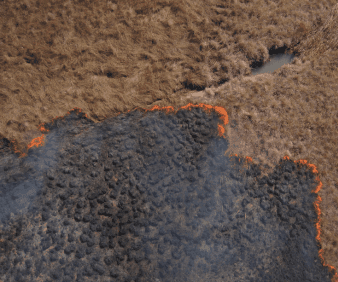

As one of South Africa’s most valuable resources, sufficient protection and effective management of our natural veld is of extreme importance to ensure the sustainable utilization and continued future production. Among the various management strategies, the controlled use of fires has emerged as a hotly debated topic. While fire can be a powerful tool for improving grazing conditions, it also brings forth challenges and risks that need to be carefully considered. Even though science has proven burning of the veld to be a potentially useful management tool, an ignorant approach can result in significant damage to vegetation, animal life and infrastructure – therefore the saying “fire is a good servant but bad master”.
Throughout history, veld fires have commonly occurred throughout Africa, both as a natural and manmade occurrence and particularly in the dry seasons. This is usually from May to October in the northern parts of the country and from November to April in the southern parts of the country. The heavy lightning storms, circulating wet and dry periods and the extensive area of the savanna biome – which is extremely flammable during the dry season – makes Africa a continent highly prone to experiencing natural fires. Historically, fires have also been deliberately started and used to improve the quality of grazing by humans for millions of years. Today, fire is recognised as an ecological occurrence that is an important driver of vegetation structure; together with other disturbances such as grazing and browsing, fire affects the balance of the grass to tree to shrub ratios. As a natural phenomenon, veld is well adapted to occasional fires, and many plant species actually depend on fire as a means of propagation and for their continued existence.


As a result, veld burning is essential for maintaining ecosystem health in numerous environments, especially in high rainfall grasslands, savannahs, and fynbos. This becomes particularly important in areas where grazing is kept at minimal levels. Controlled burning is also an important management practice in areas used for livestock or wildlife farming, to remove unpalatable vegetation and accumulated organic material (known as moribund), as well as a means of preventing or controlling bush encroachment. It has also been suggested that fire can be used to control ticks, and consequently tick-borne diseases that are prevalent in livestock.

For some time, this idea was largely dismissed due to the persistence of ticks in areas frequently subjected to fires. However, research conducted in the Ngorongoro crater and Serengeti grasslands of Tanzania revealed that controlled burning by the nomadic Masai livestock farmers led to a notable decrease in tick occurrences. As a result, controlled burning was reintroduced in the Ngorongoro Crater to manage the excessive tick populations responsible for babesiosis (redwater) in buffalo and black rhinos. Studies have also indicated that regular fires promote the growth of productive and appealing grasses, such as Themeda triandra, in the grasslands of southern Africa.
Past research has focused on the effects of season, burning frequency and intensity, vegetation type and fire type when using controlled fires. Literature shows that a head fire – one that burns with the wind – is preferred. The purpose of burning has shown to play a large role in when and how to burn; when aiming to eliminate moribund, a controlled fire with a cool intensity becomes necessary. Achieving this involves burning on a day with mild temperatures and minimal wind - the lower the fire's temperature, the lesser the harm inflicted on dormant grasses.
In contrast, when the objective is to manage overgrowth of bushes, a more intense heat is required. This can be accomplished by initiating the burn on a hot day with low humidity. A hot fire in very windy conditions can, however, result in the burning of bush vegetation up to its crown, while ground-level burning remains minimal. Subjecting the burned bush to heavy browsing, coppicing and treatment of new growth with chemicals sometime after being burned will maximise the bush control effects of the fire.
Determining the optimal time for burning is not solely based on the appropriate season, but also on the availability of combustible materials. Ideally, burning should align closely with the onset of the first seasonal rains. Burning too early exposes the scorched veld to cold winds, which can strip away valuable nutrients in the form of ash. Moreover, the surge in grass growth prompted by the fire forces these plants to tap into their reserves to endure prolonged periods without water. This scenario is particularly pertinent when the veld serves as pasture.
Certain conditions warrant refraining from veld burning. If the aim and intention is to induce out-of-season growth of green pasture, burning is highly discouraged. This is a very bad practice that results in effects similar to that of overgrazing, eventually resulting in substantial degradation of the veld. Additionally, it's recommended to abstain from burning veld in deteriorated conditions, as the already stressed veld would further deteriorate due to burning. Burning practices should be limited to veld that predominantly features climax grasses and possesses a biomass of approximately 3000 kg per hectare or more of combustible material. Moreover, it's advisable to avoid burning veld located in regions with low rainfall (400 mm/year or less). Burning such veld could lead to prolonged recovery periods if subsequent rains fail to occur.
Enhancing the botanical balance of the veld through thoughtful fire practices and effective grazing management provides a compelling rationale for incorporating controlled burning into grassland strategies. However, proceeding with this approach demands careful consideration and should never be taken lightly. Burning of vegetation leads to the loss of carbon, a vital energy source for the soil ecosystem. Additionally, it disrupts ground cover, causing reduced rain absorption and heightened soil moisture loss to the atmosphere. Fire should therefore only be employed when genuinely necessary, under the right circumstances, and with utmost caution.

Once these prerequisites are met and controlled fires have shaped the veld, a cautious approach remains essential when introducing livestock or game for grazing. The reason lies in the dynamics of freshly burned veld – it tends to entice grazers with its highly palatable renewed growth, easily leading to overgrazing of the young vegetation. To prevent this from happening, it's advised to allow the land to recover and not allow grazing until the grasses have reached a height of at least 100 mm. If you're contemplating rotational grazing, it's a strategy that holds promise. Furthermore, in regions where game freely roams, providing ample space for the recently burned patches is a strategic move. To complement this, a practical measure involves temporarily closing water points and salt licks to redirect animals away from these areas.
As far as veld management practices are concerned, the use of controlled fires can be a potent tool. Their potential to enhance ecosystems and grazing quality is evident, however, a careful and knowledgeable approach to its application is non-negotiable. While fires can rejuvenate, they also have the potential to severely disrupt. By understanding their dual nature and employing them wisely, we can harness their benefits while safeguarding the delicate balance of our natural veld.


