


Growing Faster, Grazing Smarter: The Suffolk Sheep
Known throughout the world as one of the oldest domestic
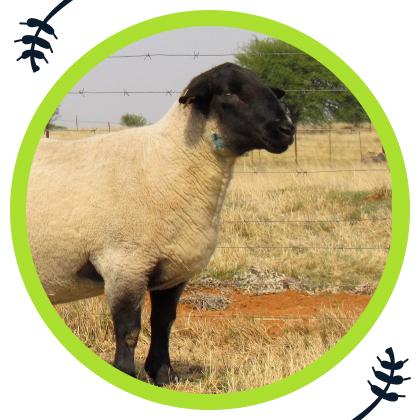


Known throughout the world as one of the oldest domestic British breeds of sheep, the Suffolk has a long history dating back to the late 1700s. This spectacular breed of sheep was originally developed in the Bury St Edmunds area of England, when a few clever breeders decided to cross Norfolk Horn ewes with Southdown rams, resulting in sheep known as “Southdown Norfolks” or “Black faces.” Although the exact history of how the Suffolk came to be is not known, the first recording of these animals was in 1797 when Arthur Young stated that “These sheep ought to be called the Suffolk breed; the mutton has superior texture, flavour, quantity and colour of gravy” in his “General view of agriculture in the county of Suffolk”.
After this, the breed was renamed accordingly and is still known today as the Suffolk sheep breed. The oldest Suffolk flocks were established by E.P. and H. Frost in the region of East Anglia around 1810, however many more flocks were established before the first Suffolk Show was held in 1859. The first classes to exhibit Suffolk Sheep were held at this show, and 26 years later, in 1886, the Suffolk Sheep Society was formed. The first flock book was published one year later, containing 46 flocks ranging in size from 50 to 1,100 ewes. All 46 flocks were in East Anglia, with 34 in Suffolk itself.

Suffolks were developed around the rotational system of farming in East Anglia, grazing on grass or clover in the summer, and then fed swedes, turnips, or mangles in the winter. Lambing was in February or March, outdoors in the fields with a hurdle shelter or in open yards. This system was very labour-intensive, but it produced high-quality lambs and allowed the breed to expand rapidly. The Suffolk sheep breed quickly became popular around the world, with the first flock in Ireland established in 1891, in Scotland four years later, and in Wales in 1901. Sheep were also exported to countries including Austria, France, Germany, Switzerland, Russia, North America, South America, and the colonies. Suffolk sheep were first introduced to South Africa in 1896 by a British major named Kitty Apthorp. He resided on a farm in Gricton, Westminister in the Orange Freestate and imported a flock of Suffolk sheep to his farm after the conclusion of the Anglo Boer War. In the years between 1900 and 1959, the breed suffered various ups and downs, including the formation of the short-lived Suffolk Breeders Society, who was taken over by the Stud Book Association of the time only a short while after their formation in 1928.
The current Suffolk Sheep Society in South Africa was only formed in 1959, during an inaugural meeting in Bloemfontein. The society was officially established in October 1960, and the certificate of incorporation was issued by the SA Studbook Association. Mr. Cliff Carter from Tweespruit was elected as the first President of the new Society. Since their formation, the society has aimed to maintain the purity of the Suffolk breed by encouraging and improving Suffolk breeding in Southern Africa by means of accurate record keeping. In the drier climates, the highly fertile rams perform excellently and with no regard for the hot summer conditions. In wet conditions, the Suffolk thrives even more, with its hard, black feet making it virtually immune to foot rot. The work-drive of the Suffolk rams enable a much larger ram to ewe ratio, greatly facilitating the management of these animals. Rams have a long lifespan, decreasing the need for regular ram replacement, and the ewes are sexually mature between 6-8 months of age – at a body weight of roughly 55kg. Despite being so young, ewes give birth relatively easily as lambs have small heads and smooth shoulders.
This low incidence of dystocia results in a much lower level of supervisory requirement. Lambs from these ewes are market ready as early as 9-12 weeks of age in favourable conditions, producing meat that is superbly flavoured and fine grained, containing the highest proportion of lean meat to fat. From its humble beginnings in Bury St Edmunds, England and despite facing challenges and setbacks, the Suffolk breed has persevered and continued to conquer the mutton industry worldwide. The adaptability and hardiness of this remarkable breed of sheep has made it a popular choice for modern farmers all over the world, with passionate breeders and societies dedicated to preserving its unique characteristics and improving its genetics. As this breed continues to impress with its exceptional growth rate and impressive adaptability, the Suffolk sheep continues to be a beloved breed cherished by many.
The Suffolk lamb is ideal for today’s market, making it an ideal breed for crossbreeding with wool breeds such as Merinos – producing wool renowned for durability, perfectly suited to home spinners whilst containing no Kemp.


