


In the Realm of Legends. The Extraordinary World of the Arabian Horse
The story of the magnificent Arabian horse echoes throughout
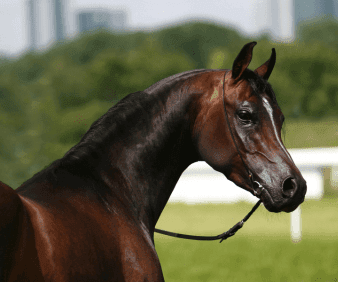

The story of the magnificent Arabian horse echoes throughout the ages; it is woven into the colourful tapestry of human history, adorned with vibrant threads of poetry, art, and romantic tales that have captivated hearts for millennia. From the dawn of civilization, the Arabian horse has graced the presence of many prominent historical figures, shaping the very course of our existence. It has galloped alongside prophets, carrying their wisdom and grace across sprawling landscapes. It has shouldered the regal weight of kings and queens, bearing their authority and nobility throughout kingdoms and empires. Across the world, diverse civilizations have embraced this extraordinary animal as a symbol of nobility, strength, and endurance. Its unique appearance and exquisite beauty have garnered admiration throughout the ages. Bred with meticulous care, it is a flawless masterpiece, blending utility and grace in perfect harmony.
Its creation was an artistry of precision, leaving no room for imperfection. While the world has evolved and progressed, the Arabian horse has remained unwavering, preserving its lineage and proudly claiming the title of the world's oldest horse breed.
Despite its timeless allure, the true origins of the Arabian horse remain shrouded in mystery. The first record of the Arabian horse emerges from the brushstrokes of ancient Egyptian art over 3,500 years ago. Yet, it was the nomadic tribes of the Arabian desert, the legendary Bedouin, who forged and honed the pure breed we know today. Originally bred as a desert warhorse, the Arabian possessed unparalleled speed and manoeuvrability—a stark contrast to the steadfast, yet much slower camels that sustained the desert dwellers with their meat, milk, leather, and transport. With their unmatched swiftness, the Arabian horse soon became the bedrock of Bedouin warfare, enabling the lightning-quick surprise raids that defined their battle strategies. The well-known high intelligence of the Arabian horse was shaped by the intimate bonds of being nurtured and raised in close communion with their humans, existing in a constant state of mutual interdependence. As a specialised product of the harshest desert environments, the Arabian horse is a direct descendant of the primitive equine stock that once roamed the vast expanse of Arabia.
Through the years of adapting to the severe environment of the desert, the Arabian horse has acquired a unique set of qualities that set it apart from all other equine breeds. These horses have developed exceptional hardiness, needing to survive on atypical sustenance like dates and camel's milk in the face of scarce pastures and water resources. Countless tales speak of Arabian horses carrying heavy riders across vast distances, enduring with limited sustenance of food and water. The thin skin and high tail carriage developed as a means of dissipating body heat to keep them cool, while the unforgiving sand and rocky desert terrain endowed the Arabian horse with strong hooves.

Despite its delicate and sometimes even small appearance, this horse exhibits a deceptive strength, boasting dense bones and compact backs. Above all else, the extraordinary stamina of the Arabian horse is what most prominently defines the physical ability of these animals.
This can be attributed to their unique muscle composition, an abundance of slow-twitch muscle fibres (as opposed to the greater proportion of fast-twitch fibres found in most other horse breeds) that enables them to utilize oxygen more efficiently, maintaining speed over extensive distances and for extended periods of time. In addition to this, their well-sprung ribs, expansive and flexible nostrils, and the distinctive attachment of the neck to the head contribute to their remarkable lung capacity and stamina. These exceptional qualities did not come about by accident but are rather the outcome of meticulous selection and intensive breeding of the original stock. The purity of the Arabian horse breed has been carefully preserved in a favourable environment, nurturing a lineage that embodies the epitome of equine excellence. This toughness and excellence have been carried from generation to generation, with Arabian horses of today still displaying robust health, lower feed requirement and overall hardiness compared to their counterparts of similar size.
Renowned for its intelligence, courage, loyalty, and spirited but gentle disposition, the Arabian breed possesses an extraordinary affinity for humans. In their wisdom, the Bedouin people treated their horses as cherished members of the family; foals grew up alongside the children, and mares sought refuge within their tents. Over time, this intimate bond became ingrained in the breed's genetics, becoming one of its most endearing traits. Arabian horses are driven by a strong desire to please their human counterparts due to the profound connections they form with them. They actively seek affection and wholeheartedly reciprocate it.
The Arabian horse is thought of as an extremely versatile horse, due to their unique combination of characteristics. Whether excelling as show horses, ridden in English or Western styles, working with cattle, racing across the tracks, or simply being the ultimate equine companion, Arabian horses engage in every task with infectious cheerfulness. They effortlessly adapt to various roles, bringing their unique talents to each endeavour.
So distinct is the Arabian horse from any other breed, that it has been recognized and classified as a distinct sub-species in its own right. The Arabian's unique characteristics and qualities set it apart, distinguishing it as a breed that stands apart in the equine world. These distinctions are evident in its skeletal structure, conformation, and intelligence, setting the Arabian horse apart wherever it may be found.

The gentleness, affection and familiarity of this unique horse breed are often shown to the point of being mischievous, nonetheless, they are beloved and cherished by horse lovers worldwide.
The genetic dominance of the Arabian breed and its profound influence on other horse breeds is a well-documented phenomenon. When Europeans first encountered the Arabian horse, they quickly recognised its extraordinary qualities and potential. It became evident that, when the Arabian was crossbred with native breeds, the resulting offspring displayed remarkable improvements in nearly all aspects of importance. They exhibited greater speed, thrived on less feed, and enjoyed an extended lifespan and much greater stamina. These observations showed breeders that Arabian blood held transformative power, which is how it became a driving force in shaping the characteristics of many of the modern light horse breeds worldwide. The Arabian's genetic legacy has permeated through generations, leaving a permanent mark on the evolution of equine breeds and in the equestrian realm.
South African breeders have fostered a unique population of Arabian horses, owing to their geographic isolation from other Arabian breeding nations. Their breeding programs draw from diverse bloodlines, including English, Egyptian, Russian, Spanish, and Polish, resulting in a very distinct Arabian lineage. While horses are not indigenous to Africa south of the equator, South Africa boasts a rich equestrian tradition that traces back to the arrival of the first white settlers in the seventeenth century.
The first registered purebred Arabian horse, "Azrek," arrived in South Africa in the early 1900s. Subsequently, additional pure Arabian mares and stallions were imported by Captain Gorner Williams, establishing the first Arabian horse stud in the country. Other notable figures such as Sir De Villiers Graaff and Mr W Lovemore contributed to the breed's development by importing Arabians from Argentina and Crabbet Arabians, respectively. Unfortunately, the offspring from these initial studs intermingled with other breeds, resulting in the loss of pure Arabian bloodlines. In 1951, Betty Arnold of Bedford founded the oldest existing Arabian stud in South Africa, the Olford Arabian Stud, with the importation of three Crabbet mares from England. The inaugural South African National Arabian Horse Show took place that same year in Graaff-Reinet, followed by the second show in 1953 in Middelburg. The National Show experienced remarkable growth, attracting 114 entries by 1959, solidifying the Arabian horse's place in South Africa. Since 1960, numerous stud farms have emerged across South Africa, importing horses from England, Europe, and the United States.

The Arab Horse Breeders' Society of South Africa, established in 1961, currently comprises approximately 550 members, mostly consisting of active breeders. However, many members also join as non-breeding enthusiasts, driven by their love for riding and showing Arabian horses. Additionally, South Africa also boasts approximately 11,000 registered or recorded pure and part-bred Anglo-Arabians. Regional and National Arabian Shows feature halter classes, as well as a wide array of riding and performance competitions, including English, Western, Formal Riding and Driving, Jumping, Dressage, Equitation, Children's classes, and Utility classes.
These shows form a significant and well-supported aspect of the equestrian community. Endurance riding, introduced in 1974, has experienced remarkable growth, with approximately 1,700 participants engaging in 40 endurance races across South Africa in 1996. These races typically span an average distance of 80 km, with the National ride covering 210 km and attracting around 250 participants who must qualify to compete. While purebred and part-bred Arabians dominate endurance races, horses of any breed are eligible to participate, resulting in mixed competitions. Arabians frequently secure victories in these races, displaying the highest average speeds over long distances. By upholding the tradition that originated in the desert centuries ago, South Africans continue to ride their Arabians and breed horses capable of carrying on this legacy.
In the realm of horses, the Arabian reigns supreme as the embodiment of beauty and nobility. Celebrated across centuries in literature and art, this magnificent breed holds an irrefutable allure. Their noble bearing, symbolized by the very word for "horse" in Arabic, echoes the essence of walking with pride. Throughout history, the Arabian's captivating beauty and regal spirit have captivated the hearts of horse enthusiasts, contributing to the enduring legacy of the breed. Those who cherish the Arabian horse share an unspoken bond, connecting not only with historical figures of the past but also with a global community of passionate breeders, owners, and enthusiasts. This shared devotion has the power to transform lives, forging connections, and providing opportunities for extraordinary experiences.

By owning an Arabian, one not only acquires a marvellous horse but also embraces an exceptional lifestyle—a world where time stands still, where legends whisper on the desert winds, and the noble hooves of the Arabian horse echo through the ages.


