


Introducing the Cattle of Kings
In the vast and beautiful land of Nkore in Western
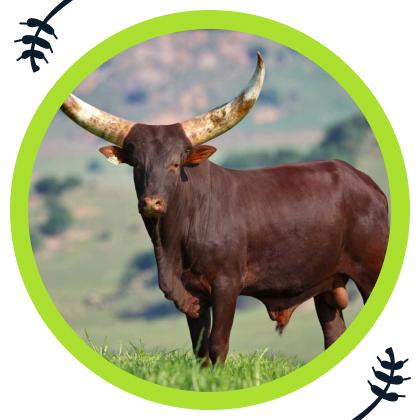


In the vast and beautiful land of Nkore in Western Uganda grazes a magnificent breed of cattle regarded as sacred by the Banyankole people, who believe that these majestic creatures were a divine gift from their ancestors as a timeless symbol of their cultural heritage. With their ivory-like horns elegantly curving in reach of the blue African skies, this breed of cattle is the very embodiment of nature’s grace and beauty. Greatly admired and revered worldwide as a symbol of status and wealth, the Ankole cattle can be traced back more than 6000 years to the hieroglyphs of ancient Egypt. They were first discovered around the Nile Valley in 4,000 BC, and back then they were known as the Egyptian or Hamitic Longhorns, as evident by the many different pictographs around the Egyptian pyramids. Travelling down the Nile-river all the way to Ethiopia 2000 years later, these animals would spread further and further South. Around the same time, the humped-cattle known as the Longhorn Zebu from Pakistan and India made their way to the African continent, and was soon after sold off to cattlemen in Ethiopia and Somalia.
Following this, the cattlemen made the decision to interbreed the Zebu animals with the Egyptian Longhorns, which led to the creation of the Sanga-type cattle. Shortly after, these animals were introduced to Uganda by pastoralists from the more Northern regions of that country, evolving into the “Cattle of Kings and Royalty” as we know them today. The lives of their keepers rotated around their beautiful Ankole herds. These animals were treated as almost sacred due to the significance they had to the cattlemen’s families, providing food and milk, leather for clothing and sandals, and religia such as drums and stools.
These magnificent creatures were bred for their prized longhorns and beautiful coloured hides, signifying the wealth of the owner and even being seen as the start of one’s journey towards wealth and dignity.
For a long time, the Ankole cattle were found only in Uganda and the close surrounding areas, but nothing so far south as South Africa. However, in 2004, South African President Cyril Ramaphosa made history by bringing the first Ankole genetics into the country. Ramaphosa’s interest in the breed was sparked when he first saw these magnificent creatures during a visit to the Ugandan President that same year.
Unfortunately, the inadequate disease control measures in place in Uganda at the time prevented him from bringing in any live animals into South Africa. After some time and with the help of Morné de la Rye - a veterinarian and director of Embryo Plus - Ramaphosa bought 43 cows, which were transferred from Uganda to an embryo station run by Embryo Plus in Kenya. Here the cows were artificially inseminated, and the embryos were flushed seven days later and sent to South Africa, where they were implanted into surrogate cows. This resulted in the birth of the first Ankole cattle in South Africa. The Ankole Cattle Breeders Society of South Africa was then formally established in 2018, and little more than a year later they could boasts almost a thousand registered cattle.

end exclusive breed of cattle in South Africa. This is mainly due to the high cost and many regulations associated with importing these animals from Uganda. Bringing Ankole cattle to South Africa is a strictly regulated and expensive process that can cost millions of Rands, a definite contributing factor to why the numbers of these animals are so low. Regardless, the Ankole breed has become a part of the larger beef production industry in South Africa, adding diversity to the breeds already available to farmers and consumers alike. The Ankole cattle have gained popularity in South Africa for their dual purpose as both a beef and dairy breed.
Their excellent milk quality, combined with their lean meat, has made them a sought-after breed among more health-conscious consumers and markets. The unique adaptations of the breed, such as their honeycombed horns and ability to withstand harsh climatic conditions, also make them practical and robust for farming. The breed has been able to adapt to most parts of South Africa, making it a versatile choice for farmers. These cattle are a major tourist attraction in South Africa, giving the opportunity for a unique hunting experience for avid hunters looking for a trophy unlike any other. These attributes make the Ankole an interesting and sought-after breed in the farming industry.
Despite their newfound popularity in South Africa and the opportunities that this breed brings to the table, the Ankole cattle still remain a sacred breed to the Banyankole people and continue to play an important cultural and economic role in Uganda. Preserving the integrity of this breed through deliberate breeding and selective practices is crucial to ensure that future generations can continue to uphold the traditions of their ancestors, and it is therefore imperative that we prioritise the conservation of this unique breed for its invaluable contributions to both cultural heritage and economic growth.


