


Milk Fever in Dairy Cows
Milk fever is the most common metabolic disorder in
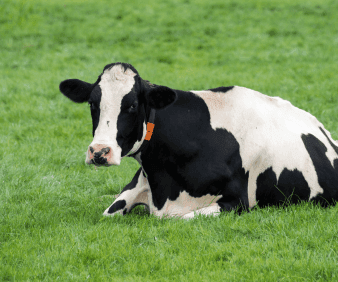

Milk fever is the most common metabolic disorder in dairy cattle resulting from a calcium deficiency, otherwise known as hypocalcaemia. Milk fever is brought on by a temporary blood calcium (Ca) deficiency that occurs around the time of calving. This deficiency is brought on during late pregnancy when Ca is transported to the foetus and in early lactation when a large Ca requirement is needed for the production of colostrum. The consequences of this condition are calving problems, stillborn calves, and unexplained moralities in the herd. Mature Jersey cows grazing lush, clover-dominated pastures right before calving are the most susceptible and between 3-10% of dairy cows in dairying districts are affected each year. Usually, milk fever is more common in high-producing dairy cows, however, cows of any age can be affected.
Cows only have about 8 - 10 g of Ca circulating in their blood while the bulk is stored in bones (6000 g) and the gut (80 – 100 g). Normally when Ca levels drop in the blood, Parathyroid hormone (PTH) is released from the thyroid. PTH then simulated osteoclasts to break down and transfer Ca from the bone into the bloodstream to increase blood Ca levels. PTH also targets the kidney where 1,25 di-hydroxy vitamin D3 is activated. This hormone stimulates the rumen to absorb more Ca to maintain adequate Ca levels.
During pregnancy and early lactation however, milk and colostrum (Ca levels in colostrum are 8 - 10 times higher than in the blood) production drains the Ca from the blood and some cows are not able to replace the Ca quickly enough. Ca reserves are therefore also depleted leading to hypocalcaemia and milk fever. The Ca concentration in the extracellular fluid (ECF) is also responsible for the transmission of nerve impulses and hypocalcaemia leads to voltage-gated ion channels opening spontaneously, which leads to nerve cells and muscle cells becoming hyperactive. This is why animals suffering from milk fever are experiencing tremors and are very excitable. Hypocalcaemia also leads to reduced muscle tone and contractibility of many organs including the cardiovascular system.

Numerous predisposing factors influence the onset of milk fever. The cow's age is a large factor because the risk of milk fever rises by approximately 9 % per lactation. Milk fever is also more common in high-producing cows that produce high amounts of colostrum. Certain breeds like the Jersey cow are more prone to milk fever as opposed to other breeds for example the Holstein cow. The main predisposing factor for the onset of milk fever is the diet of the animal. During calving the intake of feed declines and therefore Ca intake is also reduced.
Bone resorption of Ca is also inhibited when cows are given feed with high cation levels, for example, feed with high Potassium (K) and Sodium (Na) levels. The cow should also not be receiving a diet with high Ca levels during the dry period because this reduces the ability for Ca utilization from other sources. Magnesium (Mg) also influences the absorption of Ca in the gut and low Mg will reduce Ca absorption. Lastly, high oestrogen levels associated with calving inhibit the mobilisation of Ca. An easy method to reduce the onset of milk fever is to keep the body condition score of the cow between 3 - 3.25 before calving.
Treatments for milk fever should be carried out as soon as possible. Cows that are still standing should be given oral Ca that can be administered in a few forms namely, gel, bolus, or drench. Oral Ca is very advantageous because it is absorbed slowly in the digestive tract and is the same as the release of Ca consumed in feed. When cows are down, a 300 ml solution of 40% calcium borogluconate or, preferably, a combined mineral solution containing additional ingredients such as mg, phosphorus (P) and dextrose of 600ml, should be injected at several sites under the skin around the neck or behind the shoulders.
Cows that have received treatments for milk fever should not be milked for 24 hours after the treatment and thereafter milking should be done in increasing amounts over the next 2 - 3 days. These treatments should always be administered with care because if too much Ca is administered in a short period the animal could suffer from a heart attack. Prevention is always better than treatment, and prevention ensures optimum animal health, production, and fertility. Therefore, low Ca diets, a correct dietary cation - anion difference, and fat-coated Ca boluses should be used and implemented to reduce the cases of milk fever in the herd.


