


Navigating the Ideal Protein Concept in Optimising Feed Formulation for Monogastric Animals
Nutrition is one of the cornerstones in enhancing livestock health
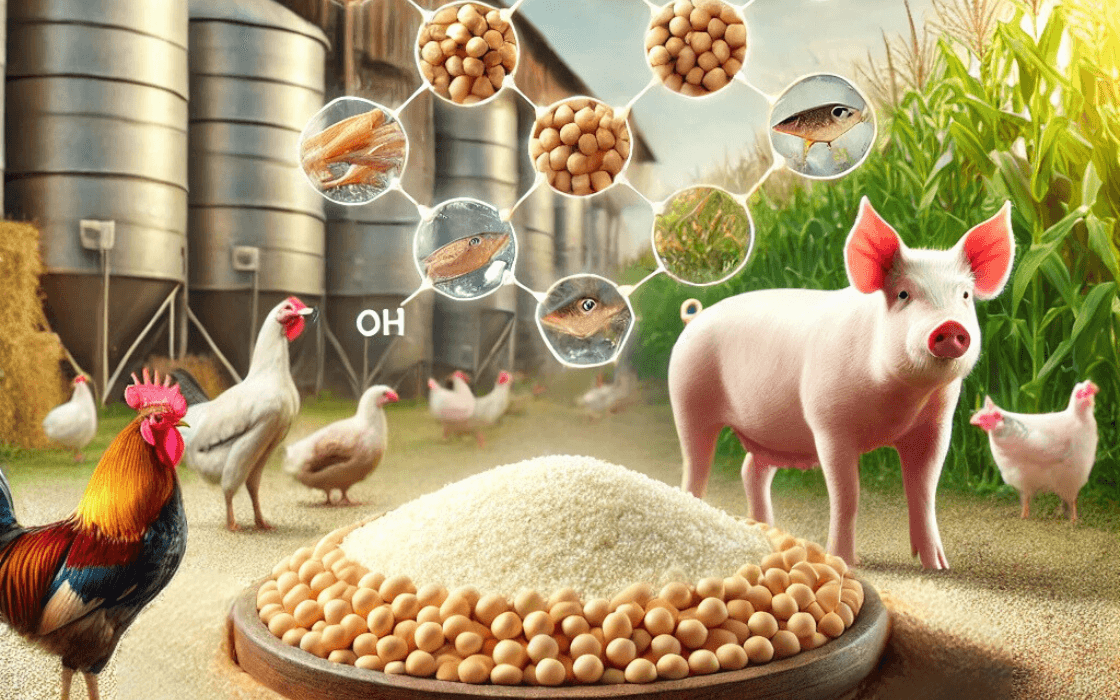

Nutrition is one of the cornerstones in enhancing livestock health and productivity, evolving alongside the advancements in genetics and management practices in livestock husbandry. Among the key nutrients under constant research scrutiny is protein, consisting of amino acids that serve as vital building blocks for various physiological functions, including growth and overall well-being. This article looks into the ideal protein concept, a powerful tool in formulating animal diets, exploring its advantages, considerations, and recent developments.

Ideal Protein Concept
Before considering the particulars of the ideal protein concept, let’s look at the basics of proteins and amino acids and their link to nutrition. Proteins are macromolecules composed of amino acids chains, commonly referred to as the "building blocks of life". These amino acids are classified into two categories: essential and non-essential. Essential amino acids are those that animals cannot synthesize on their own and must be obtained through the diet. Non-essential amino acids, on the other hand, can be synthesized by the animal's body. However, both types of amino acids are crucial for supporting various physiological functions, including tissue repair, hormone synthesis, and immune response.
The ideal protein concept in animal feed formulations is founded on the principle that animals require a balanced supply of essential amino acids to meet their specific needs, for example achieving optimal growth and development. This involves ensuring that the diet contains all essential amino acids in appropriate proportions, without any amino acid being limiting. Lysine normally serves as the reference amino acid for expressing essential amino acid requirements ratios. There are a variety of factors that will determine the optimal amino acid profile for the animal, such as breed, age, environment, health, management practices, and physiological state. For instance, in broiler production, the diet must supply the essential amino acid profile for optimal growth, while in layer production, it must cater to optimal egg production. To formulate the optimal diet for animals it is important to understand what raw materials are available and what nutrients they offer to the animal.

Exploring Protein Sources
A selection of raw materials is available to formulate a diet containing the ideal amino acid profile. Firstly plant-based protein sources, such as soybean meal, canola meal, and corn gluten meal, are widely used in animal feed formulations. These sources are rich in essential amino acids and provide a more cost-effective option for meeting protein requirements in animal diets. Secondly, animal-based protein sources, including fish meal, meat and bone
meal, and poultry by-product meal, offer a highly digestible source of protein for animals. With growing concerns about sustainability, alternative protein sources such as insect protein, single-cell protein, and algae-based protein are also gaining traction in animal feed formulations. Lastly, synthetic supplements, including amino acid additives, play an important role in ensuring a balanced amino acid profile in animal diets. All the protein sources play an important role in formulating the optimal diet for animals that is still cost-effective, this cannot be achieved by only using one source.

The Advantages of the Ideal Protein Concept
Unlocking Potential: One of the key benefits of the ideal protein concept is its ability to unlock the full growth potential of our animals. By ensuring a balanced supply of essential amino acids, we can maximize muscle development, improve body composition, and enhance overall performance.
Efficiency Boost: Achieving the ideal protein balance in animal diets can lead to improved feed efficiency, meaning our animals can convert feed into body weight more effectively. This not only reduces feed costs but also minimizes waste, contributing to a more sustainable farming operation.
Sustainability: By optimizing animal diets through the ideal protein concept, we can reduce the environmental impact of our farms. Efficient feed utilization means fewer resources are required to produce the same amount of meat, helping to mitigate our ecological footprint.
Exploring the Challenges:
Financial Considerations: Implementing the ideal protein concept may require investment in
higher-quality protein sources, which can increase feed costs. However, the long-term benefits in terms of improved animal performance and reduced resource use often outweigh the initial financial outlay.
Complexity: Balancing essential amino acids in animal diets can be a complex task, requiring specialized knowledge and expertise. For farmers without access to qualified nutritionists, navigating the ideal protein concept may present a significant challenge.
Variability in Animal Needs: Animals have diverse amino acid requirements that can vary based on factors such as age, breed, and physiological state. Tailoring diets to meet individual animal needs adds an additional layer of complexity to feed formulation and farm management.

Practical Applications and Recent Developments:
Implementing the ideal protein concept in monogastric animal feed formulation brings about unique opportunities for further improvements to farm operations.
- Precision Feeding: Advances in technology and data analytics have enabled precision feeding, allowing farmers to tailor feed formulations to the specific needs of individual animals. Precision feeding aligns closely with the ideal protein concept, optimizing nutrition and maximizing performance. However, this also comes with the added investment in refined management practices to reap the benefits.
- Sustainable Protein Sources: The search for sustainable protein sources has led to innovations in feed formulation. Alternative protein sources are being investigated such as insect protein, single-cell protein, and other alternative sources on offer. Not only are alternative protein sources investigated, but improved ways are explored to maximize the use of current resources.
- Nutrigenomics: The emerging field of nutrigenomics explores how nutrition influences gene expression in animals. By understanding these interactions, farmers can further refine feed formulations to optimize animal health and performance.
The ideal protein concept is constantly challenged and refined in research studies. In the article: “The “ideal protein” concept is not ideal in animal nutrition” published in 2022, the authors explore the notion that not only essential amino acids should be considered, but non-essential amino acids as well. Although the non-essential amino acids are synthesized by the body deficiencies might still occur hampering optimal production.
At almost all symposiums there is research discussed on amino acids’ requirements and their functions in the body emphasizing our need to understand the topic in the finest detail. At last year’s 39th Scientific Symposium held by the South African Branch of the World’s Poultry Science Association, Michael Kidd from the University of Arkansas discussed the “Latest research in branched-chain amino acid nutrition”. We are also looking forward to this
year’s program where one of the speakers, Sonia Liu from the University of Sydney, will be discussing the topic – “A Reappraisal of amino acids in broiler chicken nutrition”.
Conclusion:
We are constantly seeking ways to improve the efficiency and sustainability of our operations. The ideal protein concept offers an approach to optimizing animal nutrition and enhancing farm productivity. By carefully balancing essential amino acids and understanding their link to nutrition, we can unlock the full potential of our farms while promoting the well-being of our animals and the environment. Through ongoing research, innovation, and collaboration, we can continue to refine our understanding and application of the ideal protein concept, ensuring a brighter and more prosperous future for agriculture.


