


PORCINE NEONATAL HYPOTHERMIA
Porcine neonatal hypothermia is a condition that occurs worldwide
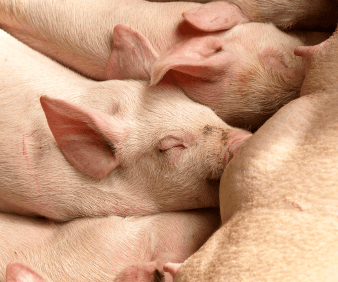

Porcine neonatal hypothermia is a condition that occurs worldwide in pigs and affects newborn piglets between 0 and 7 days of age. Hypothermia also affects older pigs of certain breeds and can lead to death. Porcine neonatal hypothermia is a drop in body temperature right after birth caused by the sudden drop in temperature from the uterus of the sow, where temperatures are between 38-40 degrees Celsius, to the farrowing environment of 20 degrees Celsius on most commercial farms. The 20 degrees Celsius on commercial farms are maintained to shield the sow from heat stress. Piglets require a minimum environmental temperature of 34 degrees Celsius for a single neonate and 25-30 degrees Celsius if the piglets are huddled together to maintain their required body temperature. Piglets are therefore born into a much colder environment that causes a drop in body temperature between 2-4 degrees Celsius immediately after birth and piglets that do not recover quickly die as a direct result of this condition.
A newborn piglet has no brown body fat. Brown body fat is generally used to generate body heat quickly, and as a result, the piglet cannot use its body fat to generate heat in cold environmental conditions. Piglets have a very high energy requirement because of this and because of the physical activity when searching for the udder. New-born piglets rely on three different energy sources to cover their need for energy. These sources are glycogen, colostrum, and transient milk. Piglets have very limited amounts of glycogen stores in the liver and muscle tissue and these deposits are sufficient for normal activity for 16 hours under ideal environmental circumstances.
Colostrum intake supplies sufficient amounts of energy because of the oxidation of fat and lactose. This can sustain the piglet for another 18 hours until transient milk becomes available for intake. Older piglets, aged 7 days and older, can use gluconeogenesis to produce glucose and therefore maintain glucose levels in the blood as well as regulate their body temperature. A delay in the intake from the udder, interruption of intake from the udder, or a high demand for energy results in the use and, ultimately, the depletion of glycogen deposits in the liver. This causes the fall of glucose levels in the blood of the piglet and a drop in body temperature resulting in hypothermia and death. This is seen by the low plasma levels and low glycogen levels in dead piglets.

Body weight, housing, environmental temperature, starvation, and even litter size are important factors that lead to porcine neonatal hypothermia. Poor housing leads to unnecessary energy expenditure and heat loss. When piglets are born and are forced to lie on the cold ground an increase in energy expenditure will occur to regulate body temperature. This will increase the onset of porcine neonatal hypothermia. Bedding should therefore be provided and kept dry to decrease heat loss. The pen should also not be located in a draft because this will decrease temperatures.
Environmental temperature is also vital in decreasing energy expenditure. A difference of a few degrees Celsius makes a huge difference in energy expenditure. When piglets overcame initial hypothermia at 34 degrees Celsius and 38 degrees Celsius respectively, the pigs at 34 degrees Celsius spent approximately 50% more energy during the first 3 hours to achieve the same effect as the pigs at 38 degrees Celsius. Starvation also affects energy levels and the use of glycogen storage. When the piglet does not receive colostrum, it uses glycogen stores in the liver which is then depleted and causes porcine neonatal hypothermia, as discussed.
There is a direct correlation between low birth weight and the onset of porcine neonatal hypothermia and piglets with low body weights are prone to hypothermia. Large litters also increase hypothermia indirectly. Larger litters decrease the birth weight of piglets and bigger litters also increase competition between piglets leading to higher energy expenditure.
Hypoglycaemia is a direct cause of porcine neonatal hypothermia and therefore hypoglycaemia treatments can be used to treat porcine neonatal hypothermia. This treatment entails intraperitoneal injections of 15 ml of 5% glucose every 6 hours or oral glucose supplementation using a stomach tube. Temperature should be kept at 30-35 degrees Celsius. If piglets cannot receive colostrum because the sow is unable to feed them an artificial sow milk replacer should be given by stomach tube initially or the piglets should be fostered onto another sow.
Prevention is better than treatment and correct environmental temperatures, dry bedding, and the absence of a draft will decrease porcine neonatal hypothermia in a litter. Correct air temperatures can be achieved by using heaters in certain areas of the pen. This should be done without affecting the sow.


