


South Africa’s Potato Landscape: Challenges, Trends & Future Outlook
6 min read|
⏳ 5-6 min - Estimated read time Potatoes are a
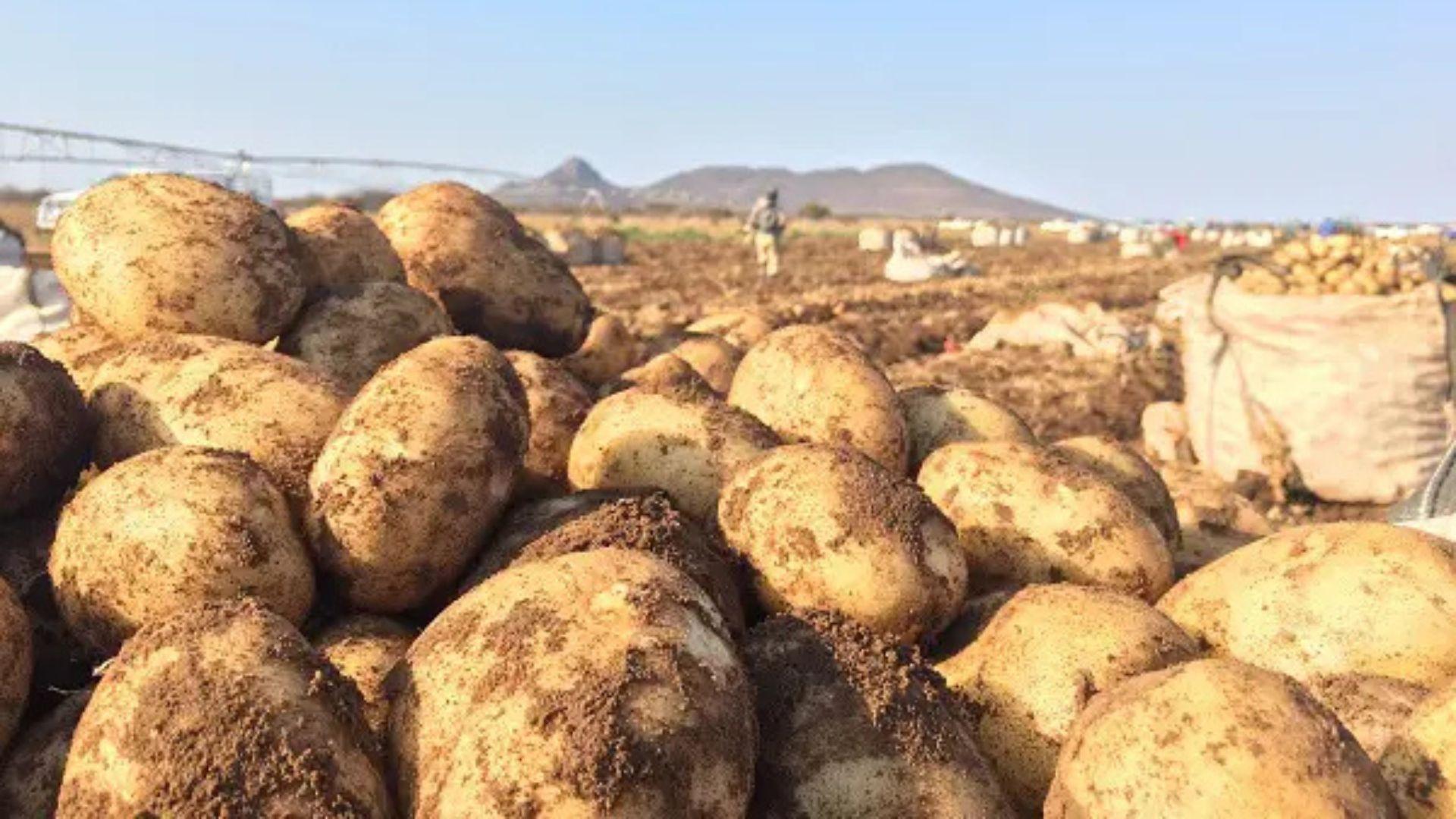

Potatoes are a staple in South African diets. They hold their place just behind maize and wheat as one of the country’s most consumed carbohydrate sources, offering both affordability and versatility. Yet behind the humble tuber lies an increasingly complex industry—one grappling with rising costs, climate volatility, infrastructure constraints, and shifting global pressures.
Production Footprint & Seasonality
Across South Africa, roughly 50,000 hectares are devoted annually to potato cultivation, producing in the ballpark of 2.4 to 2.6 million tonnes. Over 80% of this area is under irrigation, allowing producers to buffer against dry spells and smooth out annual yield fluctuations.
One of the strengths of the South African industry is its geographic diversity. Potatoes are grown in all nine provinces, which allows for year-round harvesting by staggering planting and rotating locations. The top producing regions include Limpopo, the Eastern Free State, and the Sandveld region of the Western Cape. Limpopo alone contributes about a fifth of national output—its climate is frost-free and favourable for multiple plantings in a single year. The Free State remains a backbone for highland production, while the coastal Sandveld area provides continuity during off-peak months.
Because of this spread, supply never fully dries up—but timing still matters. Winter months (May–August) tend to see tighter supplies and higher prices, whereas spring and early summer (September to November) often bring abundant harvests and downward price pressure.
Consumption Patterns & Processing
Most of South Africa’s potato production is consumed domestically—only a small fraction is exported. Fresh potatoes dominate consumer demand; typical households buy loose or bagged potatoes for boiling, roasting, frying, mashing, or stewing. Urbanization and changing diets have nudged up consumption slightly over time: South Africans now average somewhere in the mid-30 kg range per person annually.
A meaningful share of output is taken up by processing—frozen French fries, crisps, dehydrated potato products, and snack lines. But the local processing industry cannot always meet demand, and so South Africa imports frozen fries to fill the gap. That situation has caused friction: local processors argue that imported frozen products, often priced aggressively, undermine domestic capacity.
Price Behaviour & Volatility
Potato pricing in South Africa is notoriously volatile and cyclical. Because potatoes are perishable and supply shifts month-to-month, price swings are frequent. In winter, as production falls, prices typically rise. As large harvests hit the market in spring, prices decline.
In recent years, prices ranged on average between R4 and R6 per kilogram (i.e., around R40–R60 per 10-kg bag), although in peak shortage periods they were priced much higher. For example, in late 2023 and early 2024, prices surged as plantation areas declined, and weather issues depressed yields.
Sudden weather shocks, such as unexpected frost or drought in a major producing area, can drive sharp short-term price spikes. Conversely, a bumper crop in one region can depress prices nationwide, hurting growers.
Because consumers see potato prices as part of the cost of “everyday meals,” policymakers and analysts monitor potato inflation closely—its swings often exceed general food price inflation. For many households, a surge in potato costs is felt immediately in weekly food budgets.

Key Challenges & Hurdles
Climate, Water & Environmental Risk
Potatoes require consistent moisture and moderate temperatures. South Africa’s variable climate is forcing growers to navigate erratic rainfall, occasional droughts, and even rare frost incidents. Recently, a severe frost in a key producing region destroyed large swathes of crop just before harvest, triggering local shortages and price jumps.
Water is a critical input. With most potatoes grown under irrigation, access to reliable water is not optional. Yet in many areas, competition for water is intensifying—whether from urban demands, environmental flows, or regulatory limits. Some potato regions already face the possibility of reduced water allocations, which could force farmers to scale back or shift to less water-intensive crops.
Input Costs & Profit Margins
Rising prices for fertiliser, fuel, chemicals, and electricity are squeezing margins. Many of these inputs are imported, so they are susceptible to exchange rates and global commodity trends. When costs rise faster than farmers can pass them on, via higher potato prices, profitability is threatened. In recent seasons, some growers reduced their plantings because the math didn’t add up.
Electricity & Infrastructure Constraints
South Africa’s intermittent electricity supply (load-shedding) is a thorny issue for farmers. Irrigation schedules, packing operations, cold storage, and processing all suffer when power is cut. Many producers now rely on backup diesel generators, further inflating costs. Road infrastructure in rural areas is another drag—bad roads slow transport, damage tubers in transit, and raise overall logistics costs.
Pests, Diseases & Crop Health
Potatoes are vulnerable to a whole hoard of pests and diseases—late blight, bacterial wilt, tuber moths, nematodes, and more. Controlling these threats demands careful management, fungicides, clean seed potatoes, and consistent monitoring. In years with wetter weather, disease risk rises, raising both costs and yield uncertainty. Research is ongoing to breed more resilient varieties, but adoption takes time.
Outlook: What Lies Ahead
The long-term prospects for South Africa’s potato industry are cautiously optimistic, assuming key challenges are addressed.
Production is expected to rise moderately, primarily through yield improvements rather than land expansion. Some forecasts suggest potatoes could approach or exceed 2.7 to 3.0 million tonnes in the next decade, provided conditions are favourable. Researchers anticipate average yields creeping upward as better cultivars, improved irrigation practices, and precision farming techniques are adopted.
On the demand side, consumption is projected to grow in step with population, urbanisation, and shifts toward convenience and processed foods. The processed potato market (frozen fries, chips, snacks) offers a growth frontier, provided local processing firms can scale efficiently and compete with imports. Export growth may offer additional upside—especially regionally within Africa, and even niche exports to the Middle East—though exporting bulk potatoes over long distances is always challenging because of perishability.
Price stability is likely to improve somewhat, but volatility won’t disappear. In a world of climate uncertainty and input cost swings, sudden price shocks will remain part of the business. In nominal terms, potato prices are expected to drift upward modestly. But after adjusting for inflation, consumers may not see real price changes over time if supply-growth targets are met.


