


The Central Role of Soil in Agriculture
In the landscape of agriculture, the distinction between livestock farming
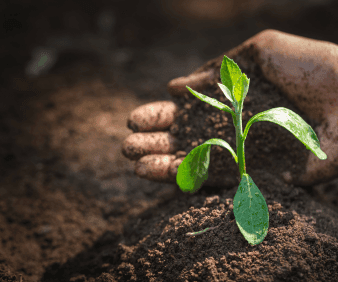

In the landscape of agriculture, the distinction between livestock farming and crop or horticulture cultivation often seems clear-cut. However, a deeper understanding of agricultural practices reveals a fundamental truth: the primary resource in both farming systems is not the animals or the plants, but the soil beneath them. Soil, with its diverse range of microbes, is arguably the planet's most valuable commodity, a resource that has been developed over millennia and yet can be destroyed in seconds by a single adverse weather event under poor management conditions. The contrary, however, is also true. If managed well, soil can work to any farmer’s benefit by reducing their water use, fertilization, land use, and reduce their greenhouse gas emissions, not to mention contributing to a more profitable business in the long run.
Soil: The Foundation of Agriculture
Soil quality is the foundation of agricultural productivity of any sort. It supports plant growth by serving as a reservoir of nutrients and water, while also providing physical stability. Soil quality is not a static attribute but the result of years of biological and geological processes. It encompasses multiple characteristics, including texture, structure, depth, water-holding capacity, and nutrient profile, all of which determine its agricultural potential. The degradation of soil quality, often through poor management practices such as overgrazing or undergrazing, inappropriate irrigation, poor nutrient management, and others, can lead to a dramatic decline in agricultural productivity. Conversely, well-managed soil can lead to sustained or even increased agricultural output. Firstly, however, it is key to understand what the underlying organisms are and how they contribute to soil health.
The Role of Soil Microbes
It is argued that a quarter of the planet’s biodiversity is kept in the soil. This microscopic ecosystem plays a crucial role in the cycling of nutrients, the decomposition of organic matter, and the enhancement of plant health. Microbes, including bacteria, fungi, protozoa, and archaea, engage in symbiotic relationships with plants, facilitating the absorption of nutrients, offering protection against pathogens, and improving stress resistance. Their activities are essential in soil formation, organic matter breakdown, and the cycling of carbon, nitrogen, and other essential elements. A rich soil microbiome will contribute to the productivity of grasslands and pastures (in the case of livestock) and crops or orchards by assisting with nutrient uptake, aeration of the soil, improving water-holding capacity and soil fertility. Moreover, a more diverse and healthy soil microbiome ultimately determines the resilience of the system production system.

Carbon Sequestration: A Natural Climate Solution
In addition to the reduction of inputs such as fertilizer and water in the presence of rich and diverse soil, carbon sequestration often walks hand-in-hand with soil health. Carbon sequestration in soil is a process where CO2 is removed from the atmosphere and stored in the soil carbon pool, primarily through the actions of plants and soil organisms. This process is vital for mitigating climate change, as it reduces greenhouse gas concentrations in the atmosphere. Plants absorb CO2 through photosynthesis and transfer a portion of the carbon to the soil through root exudates, litterfall, and the decomposition of organic matter. Soil microbes play a key role in converting this carbon into stable forms that can be stored in the soil for centuries, enhancing soil structure and fertility in the process. Increasing soil carbon sequestration involves practices that enhance plant growth and soil health, such as cover cropping, reduced tillage, strip grazing, paddock grazing, or regenerative practices in general. These practices not only improve soil carbon storage but also enhance water retention, nutrient cycling, and microbial activity, creating a virtuous cycle that benefits both the environment and agricultural productivity.
The Grass Is Greener on the Other Side
Instantly implementing regenerative practices or changing the farming system to enhance soil biodiversity seems enticing, however, it is essential to remember that adapting agricultural practices to local conditions is crucial for the success of any farming operation. While drawing inspiration from neighboring farms is beneficial, it's important to recognize that the strategies yielding results in their farming system today may be the culmination of years of dedicated soil management. What works for one farm may not be immediately replicable on another due to differences in soil history, texture, structure, and biology. Therefore, farmers must begin with a professional soil analysis.
Such an analysis provides a comprehensive overview of the soil's current condition, including nutrient content, pH levels, organic matter content, and microbial activity. This detailed understanding allows farmers to tailor their approaches to their specific soil needs, ensuring that interventions are both effective and sustainable. Whether it's adjusting pH levels to optimize nutrient availability, augmenting soil with organic matter to improve structure, or introducing cover crops to enhance biodiversity, each action is informed by the soil's unique profile. By doing so, farmers can align their practices with their long-term goals, creating a tailored roadmap to agricultural success.

Conclusion
Soil is indeed the gold of agriculture, a precious resource that embodies the legacy of generations of farmers. It is the foundation upon which sustainable farming practices are built and the medium through which we can ensure the prosperity of future generations. As farmers walk their fields, admiring their livestock or the bounty of their crops, they should take a moment to cradle a handful of soil. The soil in their hands tells a story far older than any one farm or farmer and will be the very thing contributing to a legacy they leave to future generations.


