


The History of the Ayrshire Dairy Breed
A little over 200 years ago, in the coastal town
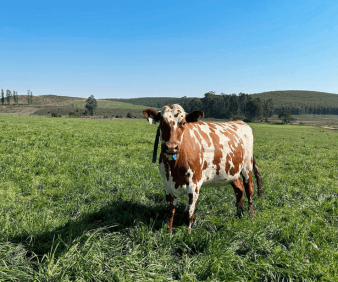

A little over 200 years ago, in the coastal town of Ayr, Scotland, a breed of red and white dairy cattle known for their efficiency, productivity, and quality emerged – a breed today known as the Ayrshire. Despite being a relatively recent breed in the world of dairy cattle, the exact origin of the Ayrshire remains shrouded in mystery, with early writers having taken little notice and recording very few particulars regarding the origin and subsequent growth of the breed. Not even traditional tales and folklore, which are a very rich part of Scottish culture and heritage, handed down many details regarding the establishment of this wonderful breed.
Evidence suggests, however, that these animals came from the careful crossbreeding of several breeds with the native black cattle of the region – a small, ill-fed type of animal known for being bad milkers. Improvement of this native breed is thought to have started around 1750 when Channel Island cattle and Teeswater cattle (who were also known in the region as Dutch, Durham, Holderness, and Lincoln cattle) were used as the initial breeds for crossbreeding. After this, various breeds or strains of cattle were used in breeding programs to develop the Ayrshire cow we now know, although the exact breeding strategies and methods of the early breeders will, possibly, forever remain a mystery. As it developed, it was first referred to as the Dunlop then the Cunningham, and finally, the Ayrshire, which was officially established as a breed by 1812.
The captivating journey of the Ayrshire breed in South Africa begins with James Rawbone of Somerset West, who introduced the first two Ayrshires bulls and eight Ayrshire cows to the country in 1890. From this modest inception, the Ayrshire breed has solidified its place as a cornerstone of the nation's dairy industry. Over almost a century, Ayrshires have etched their mark on South Africa's agricultural heritage, culminating in the anticipated centenary celebration of the Ayrshire Society in 2017.
From their place of origin in Ayr, Scotland, the Ayrshire embarked on a transoceanic voyage to South Africa under the care of early breeders. This unique breed has been nurtured and cherished, resulting in the establishment of the Ayrshire Society on 26 April 1916. This society was established with a paramount goal: to meticulously regulate registration and ensure the breed's purity. A significant milestone arrived on 17 March 1917, when the Registrar officially recognized the Ayrshire as a distinct and full-fledged breed.
The journey of fostering Ayrshire's excellence did not stop there. Recognizing the need for collective action and support, breeders' associations were formed, with the first four societies taking shape in 1913. The culmination of these efforts led to the formal establishment of the Ayrshire Cattle Breeders' Society in 1917, marked by its inaugural Annual General Meeting on the 29th of March. Legal recognition further strengthened the Ayrshire breed's presence, as the Society sought incorporation. On 5 April 1921, their application for incorporation was submitted to the Registrar, and on 12 May 1921, the Government Gazette announced the successful incorporation under the Studbook Act, Act No 22 of 1920.
Aligned with its dedication to its members, the Ayrshire Society of South Africa prioritizes their well-being, providing leadership and knowledge for collective growth in the realm of Ayrshire farming. The breed's longevity and significance are underscored by its impending centenary celebration, a testament to its enduring legacy.

Beyond South Africa's borders, the exceptional taste profile of Ayrshire milk captured international attention. Trials conducted in the UK demonstrated overwhelming consumer preference for Ayrshire milk over milk from other breeds. This led to the introduction of Ayrshire milk and products by Marks and Spencer, a prominent supermarket chain, in the late 1990s. The appeal of Ayrshire milk extended to Woolworths, which conducted taste tests revealing an impressive 87% consumer preference. Subsequently, the Ayrshire brand was launched in Woolworths stores, evolving into the largest sub-brand, growing at a remarkable 14% annually.
The resounding success of the Ayrshire brand has brought positive outcomes for both breeders and the Ayrshire Society. By steadfastly registering animals, maintaining pedigree records, and ensuring the breed's growth, these efforts have been crucial to the breed's viability. Recognized as a heritage breed, Ayrshires face challenges from larger counterparts, highlighting the importance of the premium received by the 43 Ayrshire breeders who supply Woolworths. This premium safeguards their viability and secures the ongoing existence of the Ayrshire breed in South Africa. In summary, the Ayrshire breed's journey in South Africa encapsulates a tale of vision, dedication, and resilience.
Presently, the Ayrshire occupies a privileged position, sought-after by every milk farmer in the country. It stands as a testament to the unbreakable bond between tradition and progress —a unique breed whose allure has propelled it to become the most sought-after dairy cattle in the world. Beyond its outstanding milk quality, the Ayrshire is akin to a Rand-in-your-pocket investment, boasting longevity, disease resistance, udder health, and remarkable agility that supports this claim. The surging demand for Ayrshires has witnessed remarkable growth in recent years. This demand extends not only to existing Ayrshire breeders but also to an increasing number of farmers transitioning from other breeds.
The allure of Ayrshire milk is undeniable, and its future appears bright on the horizon of South African agriculture.


