


The impact of heatstress on dairycow fertility
As with many farmers worldwide, South African dairy farmers
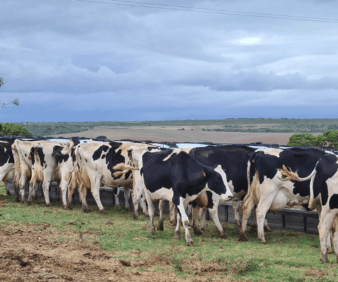

As with many farmers worldwide, South African dairy farmers are faced with an ever growing and pressing challenge— the effects of heat stress on their herds. The scorching temperatures negatively impact the reproductive efficiency of high-producing dairy cows, leading to reduced fertility and hampered milk production. But fear not, as scientists are making exciting strides in finding a solution to this problem. Let's delve into the world of heat stress, its detrimental effects, and a promising hormone-based strategy that could revolutionize the dairy industry.When dairy cows are subjected to extreme heat and humidity, their entire physiological and endocrine systems go haywire.

This disrupts crucial processes like folliculogenesis, oogenesis, and embryo development, wreaking havoc on dairy cow fertility. Hormonal imbalances arise, and the quality of follicles, ova, and embryos takes a nosedive. The result? Lower conception rates, an increased need for artificial insemination, and greater culling rates—painting a worrisome future for dairy farmers over the world and their quest to meet the growing demand for dairy products. This challenge is especially relevant to the dairy farmers in South Africa, where inland summer temperatures typically exceed the 25°C upper limit for dairy cow comfort, limiting dairy production to the cooler coastal regions of South Africa. Not only does heat stress therefore limit the possibility of expanding the dairy industry, but current production is at risk of being reduced due to loss of fertility.
What exacerbates this situation even further is the predicted rise of global temperatures. Climate projections indicate that average temperatures will increase by 1.5°C to 2°C, adversely affecting the performance of dairy cattle, especially those on pasture-based systems. As a consequence, the expansion of the dairy production industry to other provinces becomes limited, further jeopardizing the nation's food security and economic growth.
To combat these challenges, researchers have been exploring various strategies, one of which shows great promise—human chorionic gonadotropin (hCG). This hormone, which is the same as that found in pregnant women, has a potent luteinizing hormone (LH) effect, which induces ovulation and counteracts the infertility caused by heat stress in dairy cows. Unlike naturally secreted LH, hCG boasts a longer half-life, making it highly effective at initiating ovulation.
Studies comparing hCG treatment to other hormonal approaches, such as gonadotropin-releasing hormone (GnRH), have yielded exciting results. Heat-stressed cows receiving hCG exhibited a significantly lower ovulation failure rate (4.8%) compared to those treated with GnRH (12.5%). This demonstrates the potential of hCG to improve luteal/follicular dynamics in both cyclic and non-cyclic cows, leading to enhanced fertility and reproductive success.
Furthermore, implementing hCG treatment alongside protocols such as fixed-time artificial insemination (FTAI) could be a game-changer for dairy farmers battling the ravages of heat stress. By leveraging hCG's ability to induce ovulation - prolonging the life of the corpus luteum, and reducing embryo mortalities - farmers can boost reproduction levels and therefore also the genetic improvement of their dairy herds.
However, further research is essential to determine the full extent of hCG's efficiency on a larger scale. Factors like cost-effectiveness, availability, and potential long-term effects must be carefully evaluated. After all, the goal is not just to tackle heat stress on commercial dairy farms but also to provide viable solutions for small-scale and communal farmers who face similar challenges.
Addressing heat stress and its detrimental impact on fertility is vital for the financial sustainability of dairy producers, genetic enhancement of herds, and South Africa's food security. As scientists continue to unravel the potential of hCG and explore comprehensive solutions, hope shines on the horizon. The rising temperatures may pose a daunting threat, but with innovative strategies and determination, South African dairy farmers are poised to triumph over heat stress, ushering in a new era of thriving and resilient dairy farming.


