


The Regainer; Breeding as it should be
Three and a half years ago, Lochner Eksteen sat next
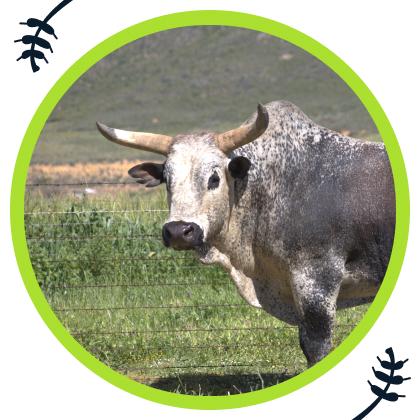


Three and a half years ago, Lochner Eksteen sat next to a crackling fire, feeling very despondent as he speculated about the future of the Nguni industry. With a pensive expression on his face, he pondered the blood, sweat, and effort he had put in, wondering if it had all been in vain. He questioned whether the fruits of his hard work would ever be seen in an industry that apparently had nothing to give back. At that time, discrimination against Nguni weaners was greater than ever, and the number of stud farmers decreased almost daily. Those who remained had lost almost all confidence in the Nguni industry, and the negativity among breeders was undeniable. Additionally, the red meat industry as a whole was in a very bad place. With a sense of hopelessness threatening to overtake him, Lochner realised that night that he had a choice: he could either complain about everything wrong with the industry and on the things it did not have to offer or he could do something about it. Without wasting any time, Lochner decided to be part of the solution and not the problem.
The question now, however, was how? How does one go about changing an entire industry and the overall impressions of that industry? What will have a large enough impact to bring about such a change? As with every other aspect of his life, Lochner approached the matter with prayer. He had realised early on that he could do nothing by his own strength and grace, and therefore first went on his knees. He then approached his mentor and greatest inspiration for advice, his father. Together, they put their heads together to tackle the challenge. Finally, Nick Serfontein, one of Lochner’s biggest role models, was consulted, and he was able to give his input on the matter. After many prayers and conversations, the solution for the Nguni industry emerged as the Regainer Breeders Group, with the aim of making a positive contribution to the breed.
The word Regainer was chosen very strategically to refer to the restoration of the Nguni status and popularity to that of earlier years. They wanted to give the Nguni breed its rightful place among other cattle breeds. The Regainer group is a sub-division of the Nguni breed. Animals that are Regainer approved maintain a certain quality that completely sets them apart from other animals in the breed. This movement attracted like-minded, hopeful farmers who put in the effort to breed good animals like a magnet. Gradually, the Regainer Breeders Group grew.
The members of the group were all individuals willing to go the extra mile with testing, selection, and record-keeping. The ideal they strived towards was that only the top 5% of animals that appear at a regular auction make up the totality of animals that appear at the Regainer auction. Only the best of the best animals from each member of the group were accepted and auctioned. For each male animal entered, a certain number of female animals must also be entered, and the animals must be approved by the society as well as external inspectors. This ensures that every animal for sale has the potential to add value to the Nguni breed as a whole and gives the animal “Regainer Approved” status. This method of auction presentation is also the first of its kind in the cattle industry.
Breeders from five provinces offer their animals at a “Bees Studio Auction,” an online auction managed by FarmSpace, Veilingshuis SHM, and with Meerkat as the online platform. Interested buyers can watch the cattle and auctioneers on live video from across the country and the world, from the comfort of their own homes, and place their bids with the push of a button. In addition to the simplified logistics that an online auction offers for buyers, it also achieves one of the Regainer Group’s most important aims: minimizing stress on the animals by limiting transport, thereby maximizing biosecurity from farm to farm. Biosecurity is of crucial importance to the group and is managed by a top veterinarian, who is a permanent part of the team. Transport and routes are also strictly planned; the cattle remain on the farm until after the auction, after which they are either transported via the N1 to a delivery point or directly delivered to the buyer’s farm.

Transport costs are subsidised by the sellers and are planned in such a way as to make it as easy as possible for both the buyer and the seller. As part of the biosecurity protocol, all animals must be quarantined for a certain period before the auction, and the necessary tests must be carried out to ensure that the herds are clean and certified. The quality of the animals at the Regainer auction is such that any buyer can have complete peace of mind in their purchase, knowing with certainty that the animal they invest in will add value to their herd. All the animals have gone through three selection procedures, two of which were done by the Nguni breeders’ association.
Buyers can make a purchase with confidence, knowing that they are getting an animal of the highest quality. The Regainer group has grown significantly over time, gaining many new members as it goes on. “Boeta, everyone wants to be part of a winning team!” These were the words of Johan van der Nest, a well-known auctioneer in the cattle industry who never misses an opportunity to act as an auctioneer at the Regainer auction. However, this was not always the case. Shortly after Lochner joined hands with FarmSpace to move the marketing up to the 2nd, 3rd, and 4th levels, they decided to contact Johan van der Nest. Initially, he did not want to know anything about being an auctioneer at an Nguni auction and was supposedly very busy on the day of the auction.
After much convincing, a little bit of brandy, and a postponement of the auction by one day to fit his schedule, Johan gave in and agreed. Needless to say, not a single auction goes by where Johan is not involved now. The infectious energy and recipe for success persuaded him and countless others to join the team.
“This is an elite auction; there really is no equal on the stage”
Lochner Eksteen
Of course, the Regainer Breeders Group does not just stop at the successes they have already achieved. The future prospect for the Regainer Breeders Group is to become a brand. The term “Regainer Approved” will already be visible on the catalogue from this year. From now on, the group will also strive to find a better market for the “Regainer Approved” animals and make a point of offering opportunities for new, young breeders who are willing to breed within the guidelines.


Furthermore, the group aims to market weaners as a group under the Regainer brand. This means that weaners will be sold in groups to feedlots, with tests and results that provide a basis for better price negotiations. The breeders are also considering creating a Nguni feedlot together as a group or approaching existing feedlots with a customised diet specifically formulated for the Nguni’s lower energy needs, to get better prices for their weaners. The lower daily growth of the Nguni breed is entirely offset by the lower costs of their diet, leading to higher profits per head. The Regainer group will always strive to involve more breeders and purchase “Regainer Approved” animals. By doing so, they help breeders to breed outstanding animals and reap the rewards of such breeding. Like a family, this group of breeders works together through challenges and problems, ensuring a better future for themselves and anyone looking to join the Nguni industry.


