


The Significance of Ticks in South Africa Part 3: The Red-Legged Tick
Rhipicephalus evertsi evertsi, commonly known as the red-legged tick, is
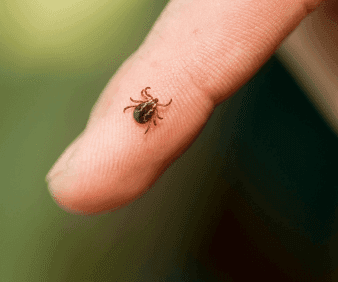

Rhipicephalus evertsi evertsi, commonly known as the red-legged tick, is one of 74 species in the genus Rhipicephalus. The red-legged tick is a medium-sized, dark-brown tick with distinctive reddish-orange legs. The adults are easily identifiable by their dark scutum and contrasting leg coloration, and are morphologically identical to Rhipicephalus evertsi mimeticus, the latter having annulated legs that can easily cause confusion with Hyalomma species, which also exhibit banded legs. R. e. evertsi is the most prevalent of the Rhipicephalus species found in Africa, with its presence reported in the majority of sub-Saharan countries.
The tick is particularly common in eastern Africa, and - except for the Northern Cape Province where its distribution is limited due to aridity - is also abundant in of South Africa. This highly resilient tick can survive without feeding for up to 14 months, during which it remains hidden in soil, and is also adapted to a wide variety of climatic conditions. In addition to its extensive distribution, R. e. evertsi is a known vector of several tick-borne pathogens that affect livestock. It remains active throughout the year, with peak activity in the summer months of December to January and minor fluctuations during winter. This adaptability and its role in disease transmission underscore the significance of R. e. evertsi in veterinary health and tick management strategies in Africa.
“This highly resilient tick can survive without feeding for up to 14 months, during which it remains hidden in soil...”
Identifying the Red-legged Tick
Identifying Rhipicephalus evertsi evertsi ticks is relatively straightforward due to their distinct physical characteristics. These medium-sized ticks possess dark brown, highly punctate scuta (conscutum and scutum) which contrast sharply with their reddish-orange body walls. The scuta are densely punctate, giving them a distinct texture, and are very dark brown in colour.
The eyes of R. e. evertsi are beady, convex, and orbited, adding to their easily recognizable features. Another key identifying characteristic is their legs, which are orange to red in colour, providing a striking contrast to the darker body parts. The adanal plates of these ticks are large and triangular in shape, and the circum-spiracular integument is covered with dense, prominent setae.

Distribution
The red-legged tick is the most widespread rhipicephalid tick in the Afrotropical region. It is prevalent in the eastern half of Africa, ranging from South Africa to eastern Sudan. It is also found in West Africa, likely introduced there via domestic livestock from East Africa. Additionally, R. e. evertsi has been introduced into Yemen and Saudi Arabia. This species is found at altitudes ranging from just above sea level to approximately 2500 meters above sea level and is most commonly found in regions with annual rainfall between 400 and 1000 mm.
R. e. evertsi inhabits a diverse range of environments, including arid and semi-arid regions, grasslands and savannahs, as well as temperate climatic regions. They are primarily active during the summer but can be found throughout the year in warmer regions. The seasonal activities and distribution dynamics of R. e. evertsi are influenced by the infestation of females attached to the host. In KwaZulu-Natal, the immature stages are active from November to June, and the adults from January to May, whereas in Limpopo, the immature stages are most abundant from April to September, while the adults are more prevalent from September to March.


Life Cycle
Rhipicephalus evertsi evertsi is a two-host tick species, with its larvae and nymphs feeding and growing on one host before the nymphs detach, drop off, and transform into adults in the vegetation. The adults then quest for a second host. In the eastern highveld regions of the Mpumalanga and Free State Provinces of South Africa, synchronous molting of free-living over-wintered nymphs leads to large numbers of adults on spring-born lambs. Multiple females are necessary to induce paralysis in the host, requiring approximately 5 days of feeding and each weighing between 15 and 21 mg. This paralysis can be reversed by removing the ticks, however, large infestations of immature ticks may cause serious damage to the ear canal of their host.
After dropping off the host, engorged females lay between 5,000 and 7,000 eggs before dying. The eggs hatch and the larvae climb onto vegetation and then onto the first hosts, attaching deep in the ear canals. They molt to the nymphal stage after about a week. The nymphs engorge in approximately one week, then detach from the host and drop off to molt into adults. The adult ticks then attach to the second and final host, remaining there for about 6 to 12 days.
Throughout its distribution zone, all stages of R. e. evertsi are present on various hosts year-round. The parasitic phase of the life cycle is spent on the host, whereas the free-living phase occurs in vegetation, and more than one life cycle can be completed in a year.


Hosts and Attachment Sites
Rhipicephalus evertsi evertsi primarily infests cattle – its preferred host – resulting in a significant source of economic losses due to tick-related issues. This tick species can, however, also be found on sheep, goats, horses, donkeys, zebras, eland, scrub hare, and various antelope. Adult R. e. evertsi ticks predominantly attach themselves in specific regions around the anus, beneath the tail, and in the groin area of their hosts. These sites provide ideal conditions for feeding and reproduction. In contrast, larvae and nymphs of R. e. evertsi have a preference prefer attaching inside the ear canal of their hosts. This location offers protection and facilitates feeding during their developmental stages. The large diversity in host species ensures that the red-legged tick can survive and propagate across different environments and in various regions.
Diseases Transmitted
Rhipicephalus evertsi evertsi, commonly known as the red-legged tick, serves as a vector for transmitting numerous diseases of significance across various animal species. Some of the most notable diseases transmitted by this tick species include:
- Redwater fever: A disease affecting cattle caused by Babesia divergens.
- East Coast fever: A major disease of cattle caused by Theileria parva.
- Cattle tick fever: Anaplasmosis caused by Anaplasma marginale, affecting cattle.
- Anaplasmosis: A disease affecting various animals including cattle, caused by different species of Anaplasma.
- Equine babesiosis (biliary fever): A disease affecting horses caused by Babesia species.
- Piroplasmosis: A general term for diseases caused by Babesia and Theileria species, affecting various animals including cattle and horses.
- Rickettsia conorii: The causative agent of Mediterranean spotted fever, transmitted by ticks including R. e. evertsi.
- Babesia equi: A species causing babesiosis in horses.
- Thogotovirus: A virus causing Thogoto fever, transmitted by ticks.
- Theileria equi: A parasite causing equine piroplasmosis, transmitted by ticks from stage to stage in horses.
- Babesia caballi: Another parasite causing equine babesiosis, also transmitted by ticks in horses.
- Babesia bigemina: A causative agent of babesiosis in cattle, transmitted transovarially by R. e. evertsi.
- Theileria separata: A parasite causing theileriosis in sheep, transmitted from stage to stage by the tick.
- Babesia theileri: The agent causing spirochaetosis in cattle, horses, sheep, and goats, also transmitted by R. e. evertsi.

Prevention and Control
Effective control of Rhipicephalus evertsi evertsi, requires strategic management practices tailored to its specific attachment sites and life cycle characteristics. Spot treatment methods, such as spraying or applying pour-on acaricides directly to areas preferred by adult ticks (around the tail, anus, and ear canal), prove more effective than traditional dipping. Implementing a strategic winter-dipping program during July/August reduces larvae numbers on animals, followed by additional treatments during peak summer months (November/December) to target adult ticks effectively.
Individual treatments, particularly crucial for susceptible hosts such as horses prone to equine babesiosis, should focus on treating adult tick attachment sites. In intensive management systems, regular acaricide applications can potentially eliminate tick-host contact, although this approach is challenging in free-ranging settings. Controlled exposure of foals to ticks aids in developing immunity early in life, promoting an endemically stable environment. With no vaccines currently available against equine babesiosis, careful monitoring of animal introductions into endemic areas and timely treatment are essential to manage disease transmission risks effectively.


