


The Tuli: Unraveling the fascinating Africa Sanga Breed
African cattle have long been classified into distinct categories
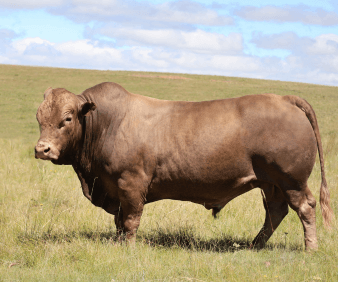

African cattle have long been classified into distinct categories based on the presence of humps and their location on the body; Zebu cattle, with thoracic humps set back on the thorax, and Sanga cattle, characterized by humps positioned more forward on the neck, form the two primary groups. According to DNA tests on cattle bones found in Zimbabwe, these remarkable creatures already existed for 2000 years. It is widely believed that these early cattle were introduced to Southern Africa through the migrations of various tribes, leading to the proliferation of Sanga cattle throughout the region South of the Zambezi River. Over centuries, a fascinating process of natural selection and adaptation to different ecological environments took place, giving rise to diverse breeds of African cattle.

Among these, the Tswana types emerged as the ancestors of the Tuli cattle we know today. For decades, researchers have delved into the origins of Sanga cattle, attempting to ascertain their closest genetic relatives. Thanks to significant strides in scientific research, especially in molecular genetics, the classification of Sanga cattle as a subgroup of Bos taurus from Europe has become indisputable. Nevertheless, significant differences, such as biochemical variations, exist between the Bos taurus cattle of British and European origin and the Southern African Sangas. Scientists attribute these distinctions to mutations and the forces of natural selection, which have finely tuned the adaptability of Sanga cattle, enabling them to flourish in the challenging tropical African environment. Therefore it has been suggested that it would be more correct to classify Sanga, such as the Tuli as a subgroup, Bos Taurus Africanus.
The Tuli cattle, with their rich historical background and unique genetic attributes, have become a beloved breed in South Africa, cherished for their resilience and valuable contributions to agriculture. Their story traces back thousands of years when the Sanga breed, from which the Tuli originates, evolved in Africa through the natural mixing of indigenous cattle with Zebu cattle herded by nomadic tribes during the first Arab invasion. Over the centuries, the Tswana cattle, a derivation of the Sanga breed, migrated Southward into Zimbabwe, where they developed the rugged heartiness that would later define the Tuli breed. Matabele chiefs carefully selected the most docile and domesticated Tswana cattle for their herds, practicing selective breeding and domestication to enhance and refine the breed's evolution.
Thanks to their efforts, the Tswana continued to prosper and became the foundation for the Tuli breed.

In the early 1940s, Len Harvey, a South African agricultural advisor working for the Rhodesian government, embarked on a groundbreaking mission near the Tuli River, Rhodesia, to establish an indigenous domestic breed of cattle. He envisioned a breed that could withstand the region's harsh conditions while providing quality food and dairy attributes to native farmers. Harvey's dream became a reality when he carefully selected the healthiest, heartiest, and most fertile Tuli cattle from the Sanga breed to form the "mother herd." With the support of the Rhodesian Agricultural Department, he established a government breeding program on a 3000-acre farm called the Tuli Breeding Station, 40 kilometers Southwest of Gwanda, Rhodesia. The Tuli cattle soon made their mark at agricultural shows, outperforming European contenders with centuries of formal breeding management.
Characterized by the ruggedness fostered over thousands of years in Southern Africa, combined with high beef and dairy quality, the Tuli breed rapidly gained popularity among commercial farmers.
Commercial farmers were impressed by its ability to thrive in the challenging African environment, while still providing superior meat and dairy attributes. As the breed gained recognition and acclaim, the Tuli Breeders Association was formed, further promoting the breed's growth and development. In 1976, the first Tuli cattle were introduced to South Africa, and they gradually made their mark through agricultural shows, information days, and prestigious auctions. The Tuli Cattle Breeders Society of South Africa was officially established in 1995, providing a platform for breeders to come together and share their passion for this exceptional breed. Over the years, the Society has seen substantial membership growth, with an increasing number of live animals registered at SA Studbook, a testament to the breed's expanding popularity. Today, the Tuli cattle stand as a symbol of African resilience and adaptability, cherished by farmers and enthusiasts alike for their rich history, remarkable genetic attributes, and their ability to thrive in diverse environments.
A defining trait of the Tuli cattle is their variation in color. Ranging from solid shades of white, and yellow, dagha to reddish-brown, their light-shaded coat and humped neck are characteristic features. The presence of either short or long horns in individual animals depends on their specific ancestry, adding to the breed's diversity. The Tswana ancestors of the Tuli experienced an extreme climate, where heat, drought, and scarcity of resources were constant challenges. To survive, the Tswana developed heat and drought tolerance, becoming adept scavengers, and seeking new food sources when conditions worsened. This adaptation process led to the development of strong legs and hard hooves, enabling them to travel long distances for sustenance. Despite facing a plethora of challenges, including parasites, diseases, heat, drought, and famine, the Tuli breed's harsh evolution ensured its survival through natural selection. Today, Tuli cattle display a moderate frame, a smooth coat, moderate-sized ears, and a dewlap. While some are horned, approximately 90% of Tuli cattle are naturally polled, adding to their appeal.
The Tuli breed is also renowned for its early maturity, docile nature, good mothering ability, and high fertility, making it highly suitable for breeding programs. Their exceptional adaptability to intense heat without showing signs of stress, coupled with their unique genotype, makes them a favoured choice in crossbreeding initiatives, providing a high degree of hybrid vigor and a substantial percentage of polled calves. Among the Tuli breed's significant attributes is its ability to produce high-quality beef. The meat from Tuli cattle consistently garners excellent ratings for its flavor, tenderness, and marbling.
Typically, Tuli cattle reach sufficient size for slaughter at approximately 18 months of age, making them efficient contributors to the beef industry.
Through scientific selection, the breed's economic value has been emphasized without compromising its natural hardiness and adaptability. The Tuli cattle have been carefully bred for specific traits, including fertility, milk production, low calf mortality in females, and growth, feed conversion, and carcass quality in bulls. Monitored and enforced through the Tuli Breed Standards of Excellence, the Tuli cattle's conformation and performance adhere to the breed's unique characteristics. These standards encompass adaptation to heat and nutritional stress, carcass merit, fertility, maternal strength, calving ease, disposition, outcross genotype, polled characteristic, solid color, moderate frame, and low maintenance.
The global distribution of Tuli cattle is a testament to their exceptional adaptability and enduring appeal. From their origins in Southern Africa, these resilient animals have made their mark in various regions, from the arid landscapes of the Karoo to the snowy mountains and lush grasslands. Thriving in extreme climates, coping with tick-borne diseases, and excelling in extensive ranching systems, Tuli cattle continue to impress breeders and farmers worldwide. Their ability to utilize even the harshest grazing while producing top-quality meat has made them sought-after in South Africa, Australia, North America, and beyond. As they continue to thrive in diverse environments and contribute to the global livestock industry, the legacy of the Tuli breed stands as a testament to the power of natural selection and the enduring bond between humans and animals.
Tuli cattle exemplify the perfect blend of natural resilience and human intervention, resulting in a breed that has thrived for thousands of years and continues to shape the future of livestock farming in Southern Africa. Their journey from ancient times to modern-day South Africa is a testament to the power of natural selection, human ingenuity, and the enduring bond between animals and their human caretakers. With their unique ability to withstand extreme climates, cope with diseases, and utilize even the poorest grazing, Tuli cattle have become a treasured asset in the country’s agriculture. As their popularity grows and their presence expands globally, the Tuli breed remains a captivating choice for breeders and farmers, offering early maturity, docile nature, and top-quality beef production. From the arid Karoo to the snow-covered mountains and coastal bush, Tuli cattle thrive, leaving an indelible mark on the agricultural landscape, their adaptability to diverse environments and exceptional performance in crossbreeding programs further solidify their place in the livestock industry.


