


THE VADERLAND, THE UYSBEES, THE DRAKENSBERGER
The first recordings of the "fat, black ox" of the
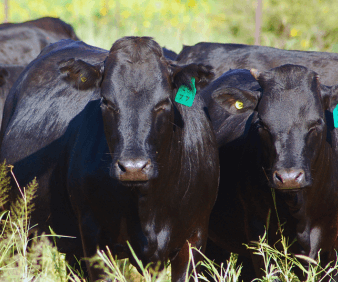

The first recordings of the "fat, black ox" of the Khoi and other indigenous groups can be traced back as far as 1497, when Vasco da Gama briefly set foot upon the beautiful shores of the Cape of Storms. For the price of three bracelets, he obtained one of these oxen for the continuation of his journey, subsequently praising the outstanding quality of the meat. Roughly 200 years later, after Jan van Riebeeck arrived and at the time Willem Adriaan van der Stel was governor of the Cape, cattle farming became a serious and extremely popular endeavour. Local farmers of the time had cattle herds of European origin that were greatly influenced by the indigenous black cattle that da Gama spoke so highly of, and these animals would become an integral part of the daily lives of the settlers of the Cape, forming a fundamental part of the history of the country and its diverse groups of people.
As time carried on, these black cattle became known as the Vaderland cattle, the very same animals used by several Voortrekker families as they left the Cape to travel north during a time called the Great Trek. Documentary evidence shows that the Voortrekkers left the Cape borders by 1835 with teams of Vaderlanders in front of their ox wagons. After the battle of Vegkop in 1836, more than 5,000 of the Voortrekkers' cattle, including the ones used as draft cattle, were stolen. These were recovered sometime later along with a number of the local Ngunis, who contributed to the genetics of the Drakensberger as we know it today. After this, many of the Voortrekkers eventually settled along the Drakensberg range. Among these were Jacobus Johannes Uys and his son Dirk Cornelius Uys, who made a significant contribution to the development and improvement of this breed.

They were dedicated to maintaining the breed's purity, and with systematic inbreeding and strict selection within a closed herd, they created a definitive breed type later known as the "Uysbees" or Uys cattle.

Only thirteen years later a commission of the Department of Agriculture recommended in a report that the Uys cattle be acknowledged as a breed in terms of the Stock Improvement Act of 1934. Because of how common and prevalent this breed of cattle was around the magnificent Drakensberg mountains, and because their development largely took place in this area, it was recommended that their name be changed to "Drakensberger”. Today, thanks to its outstanding ability to adapt to climatic and environmental conditions, the Drakensberger has spread throughout the country, from Humansdorp in the south, through the eastern Free State, KwaZulu-Natal, and eastern Mpumalanga to Messina (Also known as Musina) in the Northern Province.
Furthermore, the Drakensberger is found in other countries with challenging environments, such as Namibia, Swaziland, Lesotho, Mozambique, Zimbabwe, Botswana, and even further north in the warm and humid climate of Equatorial-Guinea and as far as Australia. On the 7th of November 1947, the South African Drakensberger Cattle Breeders' Society was established, finally recognizing the Drakensberger as an official cattle breed. In February of the following year, the first inspections recorded 621 animals, with this figure increasing almost three-fold by 1954, when 1,723 animals were recorded. Of these, 73 were bulls. In 1961, the number of recorded animals rose to 4,752, showing the astonishing growth of this well-adapted breed. Eight years later, the Drakensberger Cattle Breeders' Society was allowed as an Associate Member to SA Studbook, with Full Membership being awarded to them in 1972.
The Drakensberger Cattle Breeders' Society is deeply committed to improving and enhancing this remarkable breed and decided to make performance testing compulsory to gain membership. Since 1980, only performance-tested animals have become eligible for inspection and registration. Because the entire breed is subject to rigorous performance testing, the Drakensberger Cattle Breeders' Society conducted South Africa's first BLUP (Best Linear Unbiased Prediction) analysis using its extensive database.

The Drakensberger breed exhibits impressive versatility, thriving in various ecological settings. Historically, they have performed exceptionally well on sourveld grazing, but recent findings suggest they excel even further in sweetveld environments. These cattle adapt and prosper in a wide range of landscapes, including snow-covered peaks, grassy plains, regions with red-water and gall sickness concerns, shrub veld, sandy dunes, hot climates, and sub-tropical areas with tick and heartwater challenges. Their ability to prosper in such diverse conditions underscores their resilience and adaptability.
Originating in challenging circumstances, the Drakensberger has transformed into a
highly popular and profitable breed.
This breed hails from a time when animals had to rely mostly on natural adaptations for survival, with no access to dipping fluids or proven medicine. They had to endure and withstand the challenges posed by flies, mosquitoes, ticks, and diseases transmitted by parasites, and only the strongest and best adapted survived. Today, the Drakensberger continues to impress with its resilience and impressive performance, leading to growing international interest in the breed from countries such as the United States, Canada, and Brazil. This breed's remarkable journey is underscored by its ability to thrive in harmony with nature, and Drakensberger breeders are steadfast in their mission to preserve the traditional black animals while maximizing the production of high-quality beef, all without compromising the breed's inherent qualities.


