


Three reasons why South African businesses are going electric
4 min read|


Watch the video here!
South African businesses are under increasing pressure to do more with less. Rising fuel costs, tighter margins, and the need for faster, more reliable operations are forcing smarter decisions on the ground.
This is where electric utility vehicles are no longer a “future idea” but a practical solution already in use across farms, warehouses, estates, golf courses, and guesthouses nationwide.
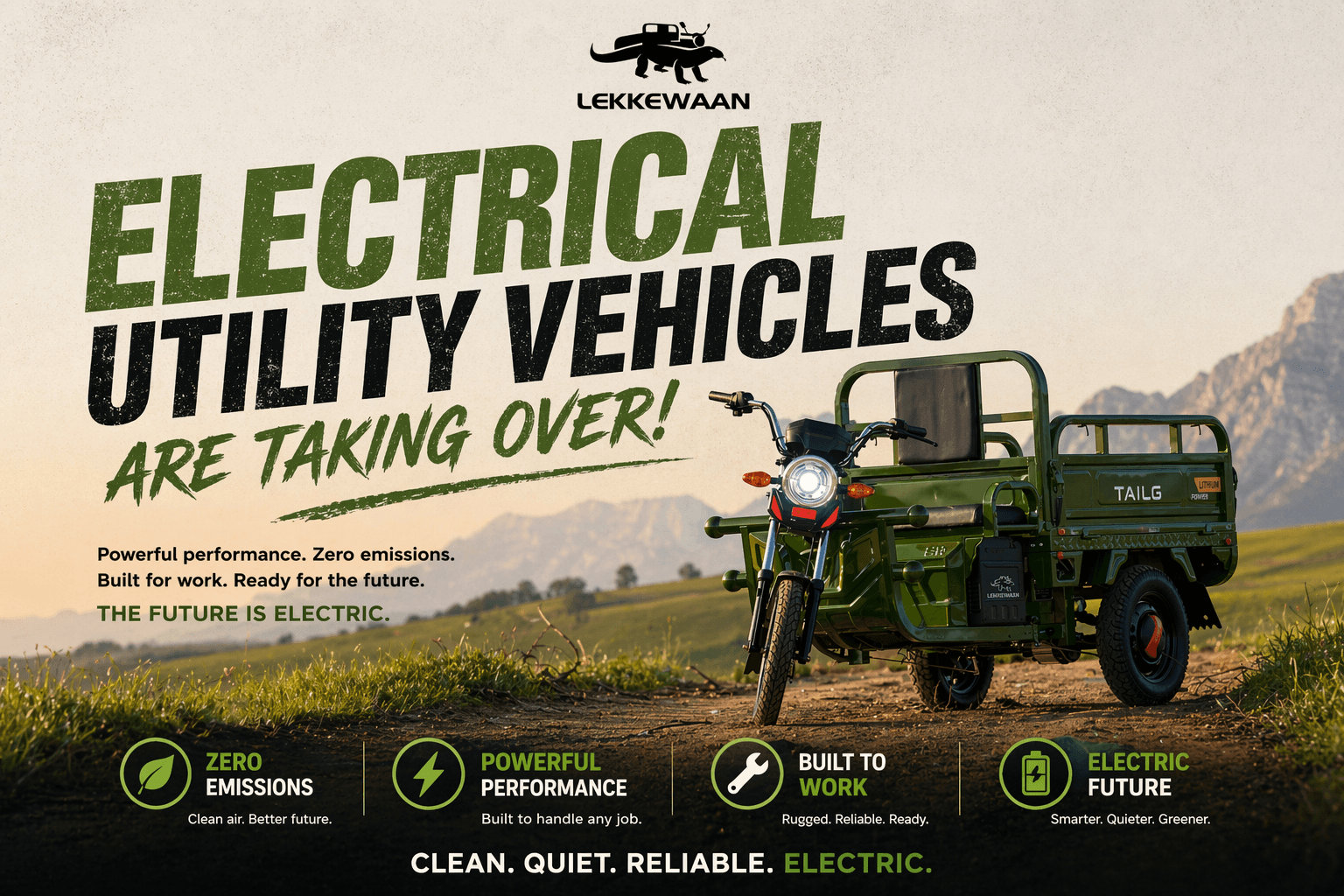
Lekkewaan has positioned itself at the forefront of this shift, with thousands of electric utility vehicles already in operation across South Africa, supported by a growing national network of agents. The reason for this growth is simple: in the right role, electric vehicles deliver real operational and financial advantages.
1. Total cost of ownership becomes more predictable and controllable
Fuel prices in South Africa are adjusted monthly, making petrol and diesel among the most unpredictable cost items for any business. For vehicles operating on short, repetitive routes, these fluctuations quickly add up to a significant expense.
Electric vehicles change this equation.
Electricity consumption can be measured, monitored, and managed on-site. Businesses can track their kWh usage, plan charging schedules, and forecast operating costs far more accurately than with fuel-based vehicles. While electricity costs are also increasing, the key advantage is control and predictability.
In addition, electric vehicles have significantly fewer moving parts. This translates into:
- Less maintenance
- Fewer breakdowns
- Reduced workshop time
- More time in operation
For businesses, this directly impacts the bottom line. A vehicle that spends less time off the road continues to generate value. Over time, this improves return on investment and reduces operational friction.

2. Productivity improves when vehicles match the working environment
Electric utility vehicles are not designed for long-distance travel — they are built for consistent, repetitive work in controlled environments. This is exactly where most daily business activity happens.
On farms, estates, warehouses and lodges, adaptability is often more valuable than speed.
Lekkewaan vehicles are specifically designed to:
- Navigate narrow paths and tight working areas
- Operate efficiently in stop-start environments
- Perform multiple roles across different departments
This results in measurable productivity gains:
- Less time wasted on manoeuvring
- Faster task completion
- Reduced internal transport delays
Another key advantage is quiet operation. In noise-sensitive environments such as guesthouses, estates, golf courses and livestock farms, silent vehicles allow teams to start earlier and finish later without disruption. This improves workflow flexibility and enhances the experience for guests, residents and workers alike.
Indoor and outdoor capability further increases efficiency. Because electric vehicles produce no exhaust emissions, they can operate safely inside warehouses, workshops and enclosed spaces — then continue working outdoors without interruption. This removes the need for multiple vehicle types and simplifies daily operations.
3. Environmental impact becomes measurable — without ignoring practical realities
South Africa’s electricity grid remains carbon-intensive, and any discussion around electrification must acknowledge this reality.
However, the immediate benefit at operational level is clear: zero exhaust emissions from the vehicle itself.
This has a direct impact on:
- Air quality in working environments
- Staff comfort and safety
- Usability in enclosed and sensitive spaces
Lekkewaan links this directly to practical workplace improvements, not just environmental positioning. Reduced fumes, less noise, and cleaner working conditions contribute to a better overall operating environment.
In addition, electricity usage is measurable. Businesses can monitor energy consumption and gradually improve efficiency over time. For companies focused on sustainability, this provides a clear and trackable pathway forward — without compromising day-to-day operations.

The shift to electric is already happening
Electric utility vehicles are gaining traction because they offer the best of both worlds: improved cost control and increased on-the-ground productivity.
When you combine:
- Lower and more predictable running costs
- Reduced maintenance and downtime
- Improved operational efficiency
- Quiet, versatile performance
- Zero on-site emissions
…it becomes clear why more South African businesses are making the switch.
This is no longer about future technology. It is about practical, proven solutions already working across the country.
Businesses that adopt early are not just reducing costs — they are improving how work gets done.


